Hospital & Healthcare Smart Pest Control in Malaysia
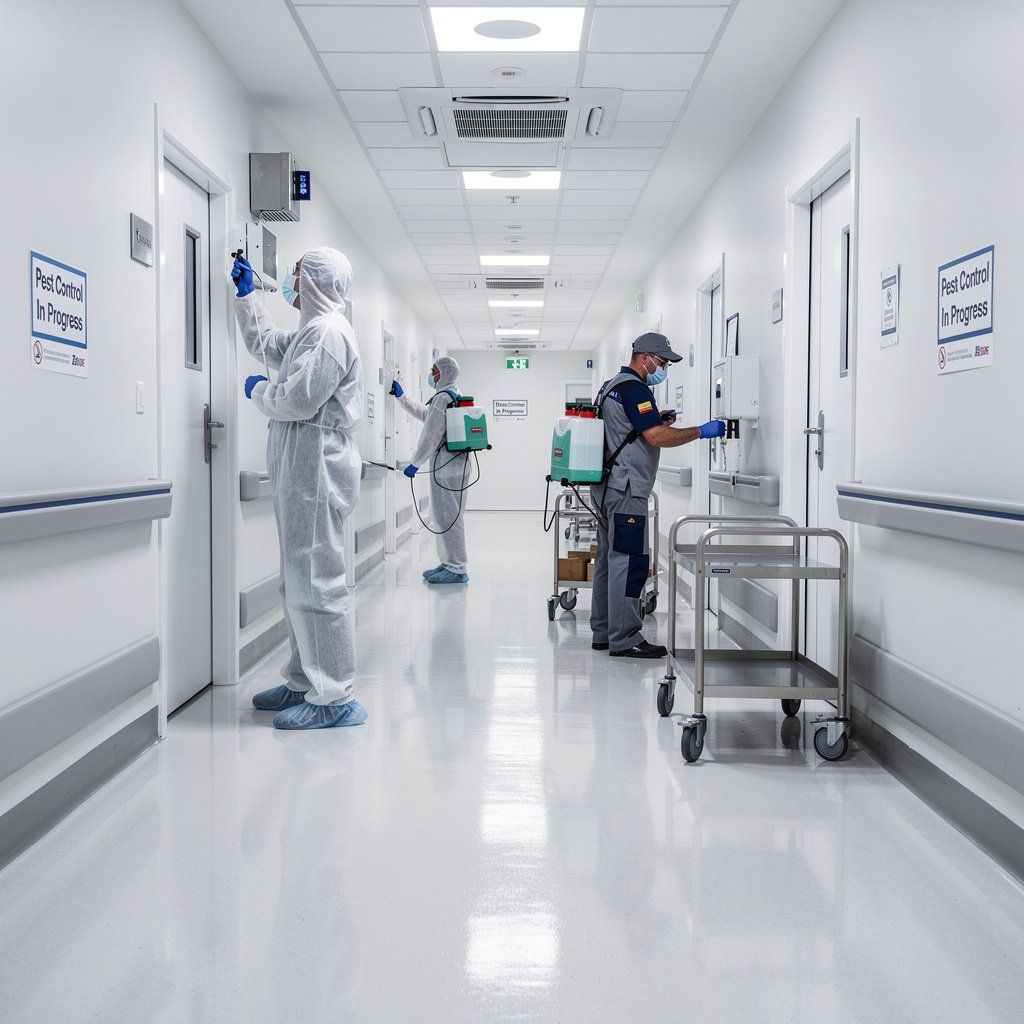
In a hospital or clinic, a pest sighting isn't just a hygiene issue — it's an infection control failure, an accreditation risk, and a patient safety concern. Uni Smart delivers specialist pest management programs for hospitals, clinics, dialysis centres, and care facilities — using infection-control safe methods, zero-disruption scheduling, and full MOH and JCI audit documentation.
- verified PAL/APAL licensed — Jabatan Pertanian Malaysia certified
- science Infection-control safe formulations — non-spray options for occupied wards
- local_hospital MOH, JCI & MSQH accreditation-ready documentation
- schedule Zero-disruption scheduling — coordinated with infection control teams
Protecting
Patient Safety & Accreditation
Pest Risks in Healthcare Environments
In healthcare settings, pests are not just a nuisance — they are a direct threat to patient safety, infection control standards, and accreditation status.
Infection Control Failures
Cockroaches and rodents carry pathogens including Salmonella, E. coli, and Leptospira — dangerous to immunocompromised patients. A pest sighting in a ward or clinical area can trigger an immediate infection control review and ward closure pending investigation.
MOH Licensing Risk
The Malaysian Ministry of Health requires all licensed healthcare premises to maintain documented pest control programs. Failure to produce pest control records during an MOH inspection can result in licence conditions, fines, or suspension of operating approval.
JCI & MSQH Accreditation
JCI and MSQH accreditation standards require documented evidence of an active pest management program. Pest activity findings during accreditation surveys can result in Requirement for Improvement (RFI) citations that delay or jeopardise accreditation renewal.
Pharmacy & Sterile Area Contamination
Rodents and insects can contaminate pharmaceutical stores, sterile supply areas, and medical equipment storage. Contaminated stock must be destroyed and the area re-validated — a costly and operationally disruptive process that also creates patient safety risk.
Hospital Kitchen & Cafeteria Violations
Hospital food service areas are subject to both MOH food premises regulations and internal infection control standards. Cockroaches or flies in a hospital kitchen can trigger immediate closure by MOH environmental health officers, disrupting patient meal services.
Dengue & Vector Risk
Hospitals with landscaped grounds, open drains, or rooftop water features face significant Aedes mosquito breeding risk. A dengue cluster linked to a healthcare facility creates serious reputational and regulatory consequences, including mandatory MOH investigation.
Our Healthcare Smart Pest Control Program
Specialist pest management designed for the unique demands of healthcare — infection-control safe, zero-disruption, and fully documented for MOH and accreditation requirements.
Cockroach Gel Bait — Wards & Kitchens
Odourless, non-spray gel bait applied in harbourage points — safe for use in occupied clinical areas. HACCP-compliant formulations in food service areas. No aerosol or spray treatments in patient zones.
Rodent Control — Perimeter & Back-of-House
Tamper-resistant rodent stations at loading bays, waste areas, and building perimeter. Internal monitoring traps in kitchens, stores, and ceiling void access points. All stations documented every visit.
UV Fly Control — Food Service & Entrances
Silent UV glue-board fly units at kitchen entry points, cafeteria perimeters, and main building entrances. Discreet and effective — fly counts recorded every visit for trend analysis and audit documentation.
Mosquito Management — Grounds & Drains
Larviciding of drains, water features, and landscaped areas. Residual treatment of outdoor perimeters. Scheduled fogging for facilities with significant outdoor exposure. Aedes-specific monitoring for dengue risk management.
Pharmacy & Sterile Area Protection
Non-chemical monitoring stations in pharmaceutical stores and sterile supply areas. Physical exclusion recommendations for entry points. Inspection and documentation structured for pharmacy compliance requirements.
Accreditation-Ready Documentation
Written service reports after every visit. Annual pest control certificate. Pest management program document structured for MOH licensing inspections, JCI accreditation surveys, and MSQH audit requirements.
How It Works for Healthcare Facilities
From initial audit to ongoing protection — keeping pests out of clinical areas, kitchens, and pharmacies without disrupting patient care.
Healthcare Facility Audit
We inspect all risk zones — wards, theatres, ICU, kitchens, pharmacies, waste areas, loading bays, and grounds. We identify current pest activity, documentation gaps, and high-risk entry points, and provide a written assessment before any treatment begins.
Infection-Control Safe Program
We design a program using infection-control safe methods appropriate for each zone — non-spray gel baits and monitoring stations for clinical areas, HACCP-compliant treatments for food service, and scheduled fogging for outdoor areas. Written proposal provided before work begins.
Regular Visits & Audit Reports
Monthly or bi-weekly visits scheduled around ward rounds, theatre lists, and operational hours. Written service report after every visit — building an accreditation-ready pest control history for MOH inspections, JCI surveys, and MSQH audits.
Healthcare Service Plans
Bi-weekly for hospitals and large healthcare facilities; monthly for clinics, dialysis centres, and specialist practices. All plans include infection-control safe scheduling, written documentation, and emergency callout.
Best for hospitals and large healthcare facilities
Bi-Weekly Program
- check_circle 24 visits per year
- check_circle Cockroach, rodent, fly, and mosquito control
- check_circle Infection-control safe methods throughout
- check_circle Written service report every visit
- check_circle MOH, JCI & MSQH audit documentation
- check_circle 4-hour emergency callout included
- check_circle Annual pest control certificate
Best for clinics, dialysis centres, and specialist practices
Monthly Program
- check_circle 12 visits per year
- check_circle Cockroach, rodent, and fly control
- check_circle Infection-control safe methods throughout
- check_circle Written service report every visit
- check_circle MOH licensing documentation provided
- check_circle Emergency callout available
- check_circle Annual pest control certificate
Healthcare Facilities We've Protected
What infection control managers and facility teams across KL & Selangor say about our programs.
"We manage a 300-bed private hospital in KL. Uni Smart coordinates directly with our infection control team and schedules all treatments around ward rounds and theatre lists. Their gel bait approach means we've never had to clear a ward for treatment. Zero pest findings in our last two JCI surveys."
Dr. Priya Nair
Infection Control Manager, Private Hospital KL
"Our MOH inspection officer specifically commented on the quality of our pest control documentation. Uni Smart's service reports are detailed, consistent, and structured exactly for what MOH inspectors look for. Our licence renewal was straightforward because of it."
Encik Faizal Hamid
Facility Manager, Specialist Medical Centre Selangor
"We run a chain of dialysis centres across KL and Selangor. Uni Smart handles all six locations under one program with consistent documentation across every site. When we had a cockroach sighting in one centre, they responded within 3 hours and had it resolved before the next patient session."
Ms. Tan Mei Ling
Operations Manager, Dialysis Centre Group KL & Selangor
Healthcare Pest Control FAQs
Common questions from hospital facility managers, infection control teams, and clinic operators.
Can pest control be carried out in occupied hospital wards? expand_more
Are your chemicals safe for use around patients, including immunocompromised individuals? expand_more
What documentation do you provide for MOH and JCI accreditation? expand_more
How quickly can you respond to a pest sighting in our facility? expand_more
How do you handle pest control in food service areas within hospitals? expand_more
Related Resources
Book a Smart Pest Control Audit for Your Healthcare Facility
Protect your patients, your accreditation, and your MOH licence with a structured pest management program built for healthcare. Our PAL-licensed team will survey your facility and design an infection-control safe, audit-ready treatment plan.