Carpenter Ant in Malaysia — The Hidden Wood Nester
Carpenter ants are Malaysia's largest ant species and one of the most damaging pests to wooden structures. Unlike termites, they do not eat wood — they excavate it, carving smooth galleries inside beams, frames, and wall cavities to house their growing colonies.
Their preference for moist, damaged timber makes them a serious concern in Malaysia's humid climate. Early detection is critical — by the time structural damage becomes visible, a colony may have been established for years.
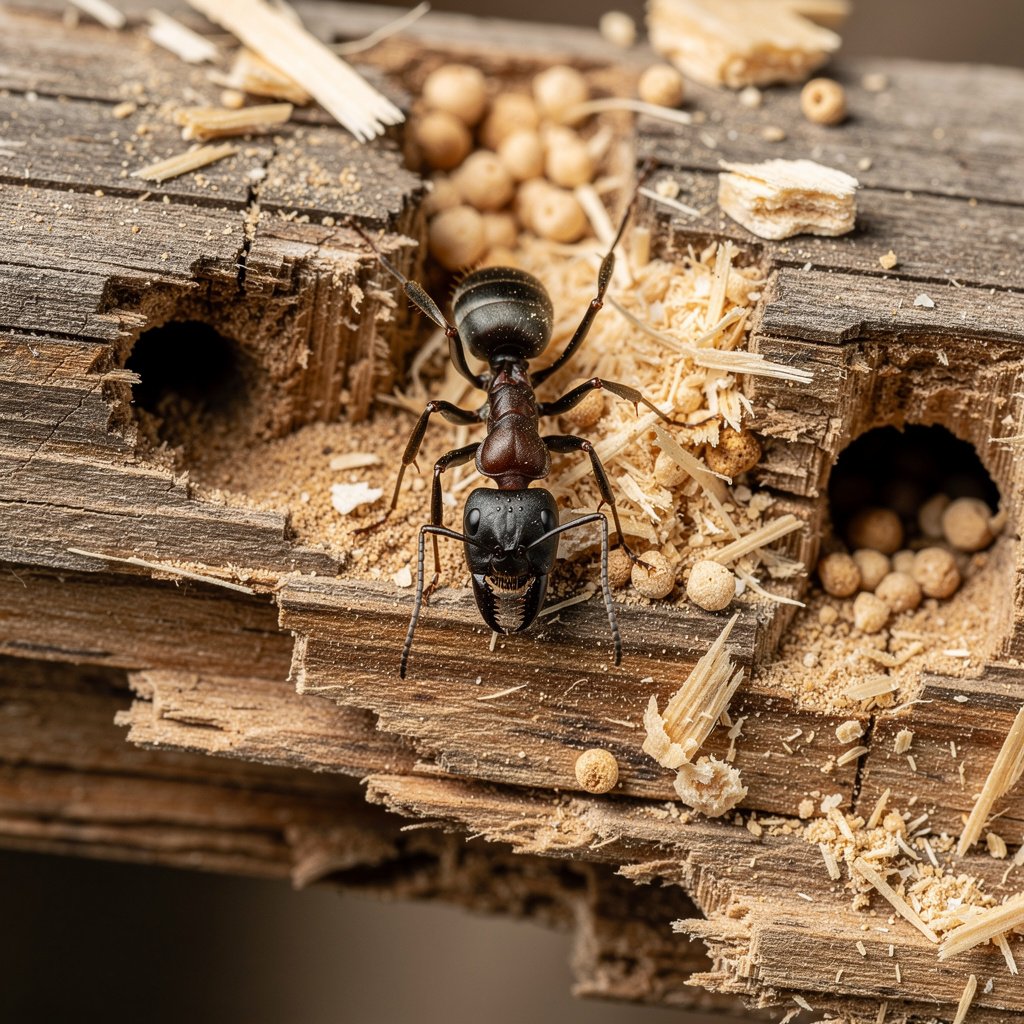
Camponotus spp.
Carpenter ant
Identification
What Is the Carpenter Ant?
Carpenter ants (Camponotus spp.) are among the largest ants in Malaysia, ranging from 6–25mm in length. Their common name comes from their habit of excavating smooth galleries inside wood to create nesting chambers — not because they eat wood, but because they are accomplished carpenters of the insect world.
In Malaysia's tropical climate, carpenter ants are active year-round and particularly attracted to structures with moisture damage, leaking pipes, or poorly ventilated roof spaces. A parent colony established outdoors in a dead tree or stump will send workers — and eventually satellite colonies — into adjacent buildings.
Unlike termites, carpenter ants do not consume wood. They push out coarse, sawdust-like frass from their galleries — a distinctive sign of their presence. Workers are primarily nocturnal, meaning infestations often go undetected until structural damage is significant.
Size
6–25mm — workers vary greatly in size
Colour
Black, dark brown, or black with reddish thorax
Nesting
Excavates galleries in wood — smooth, clean tunnels
Frass
Coarse sawdust-like debris pushed out of wood galleries
info Quick Facts
- Scientific name
- Camponotus spp.
- Family
- Formicidae
- Size
- 6–25 mm (workers vary)
- Colony size
- 3,000–10,000 workers
- Queen lifespan
- Up to 25 years
- Diet
- Insects, honeydew, plant juices
- Habitat
- Moist/decaying wood, roof spaces
warning Hidden Structural Damage
Carpenter ant infestations can remain hidden for years while silently hollowing out roof beams, window frames, and wall studs. By the time you see large ants or frass, significant structural damage may already have occurred. Early professional inspection is essential.
Nesting Locations
Where Carpenter Ants Nest
Carpenter ants target moisture-damaged wood — a common problem in Malaysia's humid tropical climate where leaks and condensation frequently go undetected.
Outdoor Nesting Sites
-
check_circle
Dead Trees & Stumps
The primary parent colony is often established in dead or dying trees near the building. Colonies here can reach tens of thousands of workers.
-
check_circle
Rotting Fence Posts & Decking
Wooden fencing, decking, and garden furniture exposed to rain and moisture attract satellite colonies that then spread indoors.
-
check_circle
Firewood Stacks
Stored firewood or timber near the building acts as a bridge colony — ants move from wood piles directly into structures.
Indoor Nesting Sites
-
check_circle
Roof Beams & Rafters
Timber in roof spaces subject to condensation or leaks is a primary target. Damage can compromise roof structure integrity.
-
check_circle
Window Frames & Door Frames
Frames with poor sealing or water ingress around edges are highly susceptible, especially in bathrooms and kitchens.
-
check_circle
Wall Voids Near Plumbing
Walls adjacent to leaking pipes or poorly insulated plumbing create ideal moisture conditions for carpenter ant galleries.
Detection
Signs of Carpenter Ant Infestation
Carpenter ants are stealthy — learn to spot the clues they leave behind before structural damage becomes expensive.
Large Black Ants
Spotting large (6–25mm) black or dark ants inside your home — especially at night near kitchens, bathrooms, or wooden structures.
Sawdust-Like Frass
Coarse, fibrous frass (wood shavings mixed with debris) found beneath wooden structures — a telltale sign of active gallery excavation.
Rustling Sounds in Walls
Faint rustling or crinkling sounds from inside walls or ceiling spaces — the sound of workers excavating wood or moving through galleries.
Damaged or Hollow Wood
Structural timber that sounds hollow when tapped, or wood with smooth-walled internal galleries free from soil or mud.
Winged Swarmers
Winged reproductive carpenter ants emerging from walls or woodwork — a sign the colony is mature and establishing new nests nearby.
Moisture Damage Areas
Any area with water staining, leaking pipes, or roof leaks is at high risk. Carpenter ants consistently follow moisture to find nesting sites.
Risks
Health & Property Risks
While carpenter ants do not pose significant health risks, the structural and financial damage they cause can be severe — particularly in older timber buildings.
Structural Damage
Hollowed-out roof beams, wall studs, and floor joists weaken building structure over time. Severe infestations can compromise load-bearing timber.
Costly Repairs
Replacing damaged structural timber, window frames, and roof members is expensive. Early detection and treatment is far more cost-effective than structural repairs.
Property Value Impact
Carpenter ant damage — like termite damage — can significantly reduce property value and complicate property sale or insurance claims.
Rapid Spread in Humid Climate
Malaysia's year-round humidity accelerates wood moisture absorption, creating constant ideal conditions for carpenter ant colony expansion.
Bites When Threatened
Carpenter ants can bite when threatened, producing a sharp pain. Large workers can also spray formic acid into bite wounds, causing irritation.
Multiple Satellite Colonies
A single parent colony can establish numerous satellite colonies throughout a building, making complete elimination without professional treatment very difficult.
DIY Limitations
Why DIY Carpenter Ant Control Fails
Carpenter ants are elusive by nature — workers forage at night, nests are hidden deep in walls and ceilings, and a single colony can have multiple satellite nests throughout a building. Surface sprays address symptoms, not the colony.
Queen Hidden Deep in Nest
Surface sprays kill foraging workers but never reach the queen in the parent colony — often located outdoors or deep within walls. The colony rebounds quickly.
Multiple Nests Throughout Building
Without locating and treating all satellite colonies, elimination is impossible — remaining nests will repopulate the treated areas.
Moisture Source Not Addressed
Without identifying and fixing the moisture problem that attracted the colony, new ants will return even after successful treatment.
Damage Misidentified as Termites
Homeowners often misidentify carpenter ant damage as termite damage, applying the wrong treatment and delaying effective professional intervention.
check_circle Professional Advantages
- done Thorough property inspection to locate parent and satellite colonies
- done Targeted baiting that workers carry back to eliminate the entire colony
- done Residual insecticide applied to foraging trails and entry points
- done Moisture assessment and recommendations to address root causes
- done Correct identification to distinguish from termite damage
- done Follow-up inspection to confirm colony elimination
Smart Pest Control
How We Eliminate Carpenter Ants
Our targeted approach combines colony baiting with residual treatments and moisture assessment to deliver lasting elimination.
Nest Location & Inspection
We conduct a thorough inspection to locate the parent colony and all satellite nests, assess moisture sources, and identify all entry points into the building.
Targeted Baiting & Treatment
We apply slow-acting bait along foraging trails and entry points, combined with residual insecticide treatment to eliminate workers, satellite colonies, and the parent queen.
Follow-Up & Prevention
We return to confirm elimination, advise on moisture repairs to remove attractants, and recommend structural modifications to prevent future infestations.
Treatment Methods We Use
Baiting Systems
Slow-acting baits placed on foraging trails — workers carry the bait back to eliminate the queen and entire colony.
Residual Spray
Long-lasting insecticide applied to entry points, trails, and structural voids to create a persistent treatment barrier.
Nest Inspection & Drill Treatment
For confirmed wall/timber nests, targeted insecticide injection directly into the gallery system for rapid colony knockdown.
FAQ
Frequently Asked Questions
How can I identify carpenter ants? expand_more
Do carpenter ants damage wood like termites? expand_more
Where do carpenter ants nest? expand_more
What are signs of carpenter ant infestation? expand_more
Can I get rid of carpenter ants myself? expand_more
Spotting Large Black Ants?
Don't let carpenter ants silently hollow out your home's timber structure. Our specialists locate hidden colonies, treat all nesting sites, and advise on moisture control to protect your property.