 Termites
Drywood Termite in Malaysia — Hidden Wood Invaders
Unlike their subterranean cousins, drywood termites live entirely inside the wood they consume. They need no soil contact, making them particularly difficult to detect as they silently hollow out wooden structures, furniture, and fixtures from within.
Their ability to infest dry, sound wood and produce distinctive frass pellets makes them unique among Malaysian termite species.
Cryptotermes spp.
Common genus in Malaysia
Identification
What Is the Drywood Termite?
Drywood termites are termite species that can live entirely within dry, sound wood without needing contact with soil or external moisture sources. They extract all the water they need from the wood itself through efficient digestive processes.
In Malaysia, the most common species are Cryptotermes cynocephalus (light Asian drywood termite) and Incisitermes minor (Western drywood termite). These species are particularly fond of hardwoods commonly used in Malaysian furniture and construction.
Drywood termite colonies are smaller than subterranean colonies, typically containing a few hundred to a few thousand individuals. However, multiple colonies can exist simultaneously in a single structure, causing significant cumulative damage.
compare_arrows Key Differences from Subterranean Termites
- check Live entirely inside wood — no underground nests
- check Larger body size (up to 12mm for swarmers)
- check Produce visible frass (hexagonal pellets)
- check No mud tubes — create kick-out holes instead
- check Smaller colonies but can have multiple colonies
info Quick Facts
- Scientific name
- Cryptotermes cynocephalus
- Family
- Kalotermitidae
- Colony size
- 500–2,500 termites
- Swarmer size
- 8–12 mm with wings
- Habitat
- Inside dry, sound wood
- Moisture needs
- None — extract from wood
- Frass production
- Hexagonal pellets
lightbulb Did You Know?
Drywood termites can survive in wood with as little as 3% moisture content. Their ability to recycle nitrogen allows them to thrive in conditions that would kill other termite species. This makes them particularly challenging to control in Malaysia's varied climate conditions.
Habitat & Problems
Where Drywood Termites Cause Damage
Drywood termites target any dry wood in your property — from structural timbers to valuable furniture and decorative items.
Structural Wood
-
roofing
Roof Trusses & Rafters
Attic spaces and roof structures are common targets. Damage often goes unnoticed until leaks occur or structural integrity fails.
-
door_front
Door & Window Frames
Hardwood frames are particularly attractive. Kick-out holes and frass piles often visible at the base of frames.
-
floor
Wooden Flooring
Parquet, hardwood, and timber flooring can be hollowed from below. May cause squeaking or soft spots when walked on.
-
wall
Wall Studs & Panelling
Internal wall structures and decorative wood panelling. Often discovered during renovation work.
Furniture & Items
-
bed
Wooden Furniture
Antique and solid wood furniture are prime targets. Infestations often start in stored or second-hand pieces.
-
image
Picture Frames & Artwork
Wooden frames and backing boards. Can destroy valuable artwork and photographs.
-
menu_book
Books & Bookshelves
Paper and cardboard are cellulose-based and attractive to drywood termites. Libraries and archives at risk.
-
checkroom
Wardrobes & Cabinets
Built-in and freestanding storage furniture. Often infested through joints and hidden areas.
Risks
Damage & Financial Risks
While drywood termite colonies are smaller, their hidden nature and multiple colony potential make them a serious threat.
Hidden Damage
Drywood termites work entirely inside wood, leaving only a thin veneer intact. Damage can be extensive before any external signs appear, making early detection difficult.
Multiple Colonies
Unlike subterranean termites with one large colony, drywood termites can establish many small colonies throughout a structure. Each colony operates independently, multiplying damage potential.
Valuable Item Loss
Drywood termites often target valuable wooden furniture, antiques, and artwork. These items may be irreplaceable or have sentimental value beyond their monetary worth.
Spread Through Movement
Infested furniture or wooden items can transport drywood termites to new locations. Moving infested items spreads the problem to previously unaffected areas.
Structural Compromise
While slower than subterranean termites, drywood termites can eventually compromise structural timbers, roof supports, and load-bearing elements if left untreated.
Treatment Costs
Whole-structure fumigation for extensive drywood termite infestations can be expensive. Localised treatments require precise identification of all colony locations.
Detection
Signs of Drywood Termite Infestation
Unlike subterranean termites, drywood termites leave distinct signs that can help with identification.
Frass Pellets
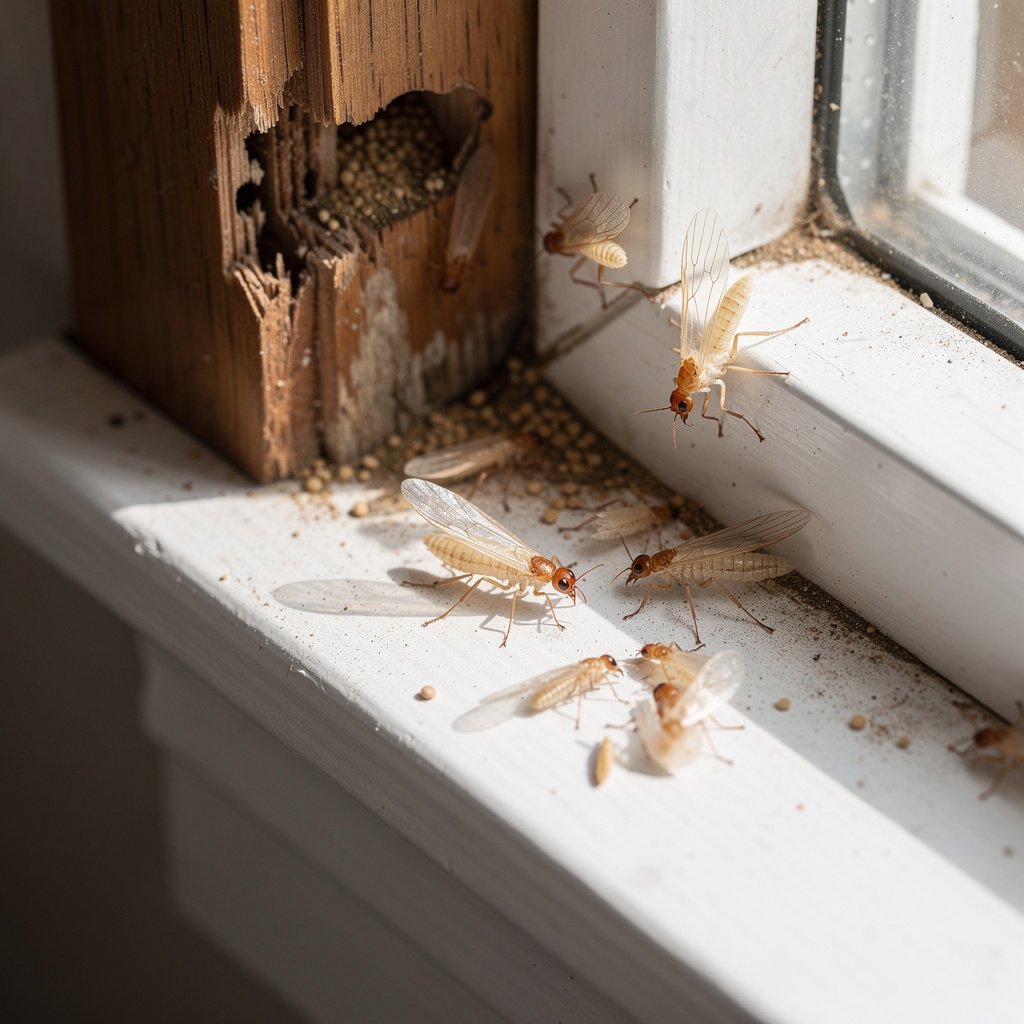
Small piles of hexagonal, wood-coloured pellets beneath kick-out holes. Unlike sawdust, frass has distinct six-sided shapes and feels gritty when rubbed between fingers.
Kick-Out Holes
Tiny, perfectly round holes (1–2mm) in wood surfaces where termites push out frass. Often found in lines or clusters on infested timber or furniture.
Discarded Wings
Shed wings from swarmers (alates) near windowsills, light fixtures, or on surfaces. Drywood termite swarmers have distinctive red-brown heads and are larger than subterranean swarmers.
Hollow-Sounding Wood
Tapping on infested wood produces a hollow or papery sound. A screwdriver may easily penetrate the surface, revealing galleries (tunnels) inside.
Blistered Wood Surface
Wood surfaces may appear blistered or uneven as termites tunnel close to the surface. Paint may crack or bubble over infested areas.
Live Swarmers
Winged reproductive termites emerging from wood, especially during warm, humid periods. Unlike ants, termites have straight antennae and equal-length wings.
Frass Identification Tip
To distinguish drywood termite frass from sawdust, place some in your hand and rub it between your fingers. Frass feels gritty and hard due to its hexagonal pellet shape, while sawdust feels soft and powdery. A magnifying glass will clearly show the six-sided pellets.
DIY Limitations
Why DIY Drywood Termite Treatment Fails
Surface treatments and hardware store solutions rarely eliminate drywood termite colonies because the termites live deep inside wood, protected from external applications. Without reaching the entire colony, infestations persist and spread.
Surface Sprays Can't Penetrate
Termites live inside wood galleries, protected from surface sprays. DIY treatments only kill termites that venture to the surface, leaving the colony intact.
Multiple Colonies Missed
DIY treatments often address visible signs while missing additional colonies elsewhere in the structure. Untreated colonies continue to grow and eventually re-infest treated areas.
Inadequate Fumigation
Whole-structure fumigation requires specialised equipment, licensed professionals, and strict safety protocols. DIY fumigation attempts are dangerous and ineffective.
Hidden Galleries Remain
Without professional inspection tools, hidden galleries in wall voids, attics, and furniture remain untreated. Termites continue damaging wood from these protected locations.
check_circle Professional Advantages
- done Thorough inspection using moisture meters, borescopes, and acoustic detection
- done Precision wood injection with termiticide directly into galleries
- done Whole-structure fumigation for extensive infestations
- done Heat treatment that penetrates entire wood sections
- done Identification and treatment of all colony locations
- done Warranty and follow-up monitoring
Smart Pest Control
How We Eliminate Drywood Termites
Our targeted treatment approaches address drywood termites based on infestation extent, location, and your specific needs.
Detailed Inspection
We conduct thorough inspections using specialised equipment to locate all colonies, assess damage extent, and identify the best treatment approach for your situation.
Targeted Treatment
Based on findings, we implement the most effective treatment — localised injection for isolated infestations, heat treatment for furniture, or fumigation for whole-structure problems.
Verification & Protection
We verify treatment effectiveness through follow-up inspections and provide recommendations for preventing future infestations, including protective treatments for vulnerable wood.
Treatment Methods We Use
Wood Injection
Direct injection of termiticide into kick-out holes and galleries. Effective for localised infestations in furniture or structural wood.
Heat Treatment
Raises wood temperature to lethal levels (above 50°C) for termites. Chemical-free option ideal for furniture and sensitive areas.
Fumigation
Whole-structure treatment with gas fumigant that penetrates all wood. Most effective for extensive, widespread infestations.
FAQ
Frequently Asked Questions
How are drywood termites different from subterranean termites? expand_more
What does drywood termite frass look like? expand_more
Can drywood termites infest new furniture? expand_more
How do you treat drywood termites? expand_more
Are drywood termites common in Malaysia? expand_more
Suspect Drywood Termites?
If you've noticed frass pellets, kick-out holes, or other signs of drywood termites, our specialists can confirm the infestation and recommend the most effective treatment for your situation.