Fire Ant in Malaysia — The Aggressive Stinger
Fire ants are among the most aggressive ant species found in Malaysia. Named for their painful, burning sting, these reddish-brown ants swarm in large numbers when disturbed and can inflict multiple stings in seconds. Their distinctive dome-shaped mounds are a common sight in gardens, parks, and agricultural areas.
Beyond the pain they cause humans and pets, fire ants damage crops, electrical equipment, and landscaping. Their rapid colony growth and aggressive defence make professional control essential for effective management.
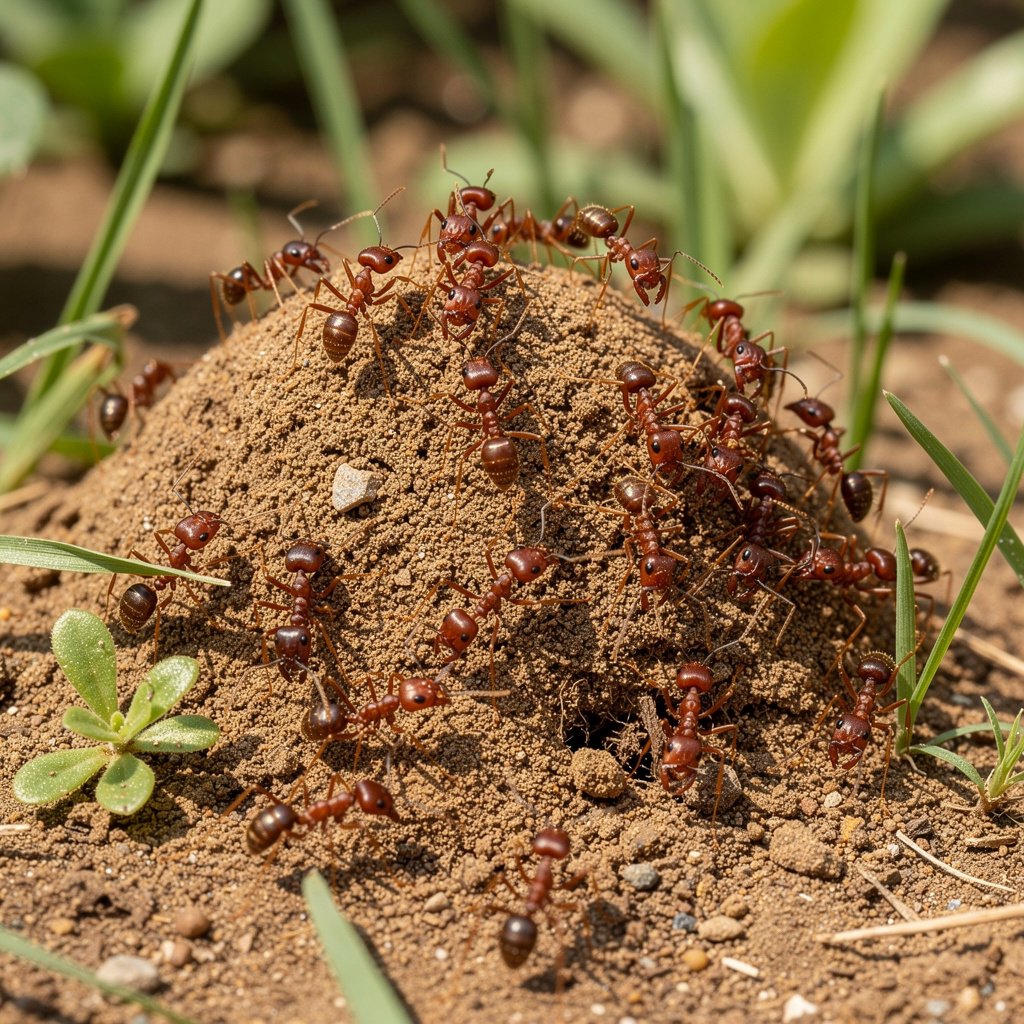
Solenopsis geminata
Tropical fire ant
Identification
What Is the Fire Ant?
The tropical fire ant (Solenopsis geminata) is one of the most common and problematic ant species in Malaysia. Named for the burning sensation of their sting, these ants are notorious for their aggressive defence of territory and painful attacks on humans, pets, and livestock.
Fire ants are small but formidable. They range from 2–6mm in length and display a distinctive reddish-brown to dark brown colouration with a coppery sheen. Their most identifying feature is their aggressive swarming behaviour — disturb a nest, and hundreds of ants will rush out to attack simultaneously.
Unlike most ants that simply bite, fire ants grasp the skin with their mandibles and then swing their abdomen forward to deliver multiple stings from a venom-injecting stinger. Each sting produces a burning sensation that can last for hours.
Size
2–6 mm, with workers varying in size
Colour
Reddish-brown to dark brown, coppery sheen
Behaviour
Extremely aggressive, swarms when disturbed
Sting
Multiple stings, burning pain, white pustules
info Quick Facts
- Scientific name
- Solenopsis geminata
- Family
- Formicidae
- Size
- 2–6 mm (workers vary)
- Colony size
- Up to 500,000 ants
- Sting severity
- Painful, can cause allergic reactions
- Diet
- Omnivorous — insects, seeds, sweets, protein
- Habitat
- Gardens, lawns, open soil areas
warning Allergic Reaction Risk
Fire ant stings can trigger severe allergic reactions including anaphylaxis in sensitive individuals. Multiple stings from a disturbed colony can be life-threatening. Never attempt to remove fire ant mounds without professional help or proper protective equipment.
Impact Areas
Where Fire Ants Cause Problems
Fire ants create hazards for people, animals, infrastructure, and crops — both outdoors and inside buildings.
Outdoor & Landscaping
-
check_circle
Gardens & Lawns
Dome mounds damage lawn equipment and create sting hazards for gardeners, children, and pets.
-
check_circle
Parks & Playgrounds
Colonies in high-foot-traffic areas pose serious sting risk to children and elderly visitors.
-
check_circle
Agricultural Land
Attack crops, damage irrigation systems, and injure farm workers and livestock.
-
check_circle
Roadsides & Drains
Nest along road verges, drain edges, and open soil — spreading rapidly to adjacent properties.
Indoor & Electrical Infrastructure
-
check_circle
Electrical Panels & Switchboards
Fire ants nest in electrical equipment, causing short circuits, equipment failure, and fire hazards.
-
check_circle
Air Conditioning Units
Compressors and wiring inside AC units attract colonies, leading to costly equipment damage.
-
check_circle
Wall Cavities
Colonies establish satellite nests inside walls and floor voids of homes and commercial buildings.
-
check_circle
Food Facilities
Contaminate food storage and preparation areas, posing HACCP compliance risks for food businesses.
Detection
Signs of Fire Ant Infestation
Catch a fire ant problem early before the colony grows to hundreds of thousands of workers.
Dome-Shaped Mounds
Distinctive dome mounds in soil (15–25cm tall) with no visible entrance holes on the surface. Found in sunny, open areas.
Swarming Behaviour
Hundreds of ants rushing out and swarming upward when a mound is disturbed. Extremely aggressive response.
Foraging Trails
Lines of reddish-brown workers moving between the mound and food sources — especially near food storage or kitchen areas.
Unexplained Sting Reactions
Family members or pets experiencing painful stings with white pustules developing within 24 hours — often from invisible mounds.
Electrical Failures
Unexplained electrical malfunctions, tripped circuits, or AC unit problems — fire ants commonly nest in electrical equipment.
Winged Ants (Alates)
Winged reproductive ants emerging from mounds during swarm season signal a mature colony ready to establish new colonies nearby.
Risks
Health & Property Risks
Fire ants pose serious risks to people, animals, and infrastructure — especially in Malaysia's tropical conditions where colonies thrive year-round.
Painful Stings
Each sting delivers venom causing an immediate burning sensation, followed by a white pustule within 24 hours. Multiple stings cause intense pain lasting hours.
Anaphylactic Shock
Sensitive individuals can experience severe allergic reactions including throat swelling, difficulty breathing, and anaphylaxis — a medical emergency requiring immediate treatment.
Secondary Infections
Scratching fire ant pustules can introduce bacteria, causing secondary infections including impetigo and cellulitis, especially in children.
Electrical Damage
Colonies nesting in electrical equipment cause short circuits, equipment failures, and fire hazards. Repair and replacement costs can be substantial.
Agricultural Damage
Fire ants attack seedlings, damage irrigation systems, injure farm workers, and reduce agricultural yields — a significant concern for Malaysia's farming sector.
Landscape Destruction
Mounds damage lawns, harm grass roots, and create an unsafe environment in gardens, parks, and recreational areas — deterring use of outdoor spaces.
DIY Limitations
Why DIY Fire Ant Control Fails
Fire ants are notoriously resistant to home treatments. Their deep underground colonies, aggressive nature, and ability to quickly relocate make DIY control largely ineffective — and dangerous without protection.
Queen Survives Surface Treatments
Pouring boiling water or household insecticide on mounds kills surface workers but rarely reaches the queen deep underground — the colony rebuilds within weeks.
Colony Relocates When Disturbed
Disturbing a mound signals the colony to move, spreading fire ants to new areas of your property or into neighbouring spaces.
Sting Risk During Treatment
Untrained handling of fire ant mounds results in swarming attacks — a serious risk of multiple stings and potentially life-threatening reactions.
Multiple Queens in Large Colonies
Established colonies may have multiple queens. Eliminating one does not destroy the colony — only targeted baiting reaches all reproductive females.
check_circle Professional Advantages
- done Slow-acting bait carried by workers to queen, eliminating the entire colony
- done Direct mound injection treatments with professional-grade products
- done Safe treatment by trained technicians with full protective equipment
- done Property-wide survey to locate all colonies and satellite nests
- done Follow-up monitoring to confirm colony elimination
- done Prevention advice to reduce re-infestation risk
Smart Pest Control
How We Eliminate Fire Ants
Our targeted approach focuses on colony elimination — not just surface workers — using professional baiting and mound treatment methods.
Colony Mapping & Survey
We inspect the entire property to locate all mounds, foraging trails, and satellite colonies — including those inside electrical equipment and walls.
Targeted Baiting & Mound Treatment
We apply slow-acting bait that workers carry to the queen, combined with direct mound injection treatments for rapid knockdown of aggressive colonies.
Follow-Up & Monitoring
We return to confirm colony elimination, check for new mounds, and advise on property modifications to reduce future re-infestation risk.
Treatment Methods We Use
Baiting Systems
Slow-acting bait carried by workers into the colony, targeting the queen and brood for complete colony elimination.
Gel Bait Treatment
Targeted gel baits for indoor foraging trails, applied safely without disruption to normal activities.
Mound Injection
Professional-grade insecticide injected directly into mounds for rapid knockdown and colony disruption.
FAQ
Frequently Asked Questions
How can I identify fire ants? expand_more
Are fire ant stings dangerous? expand_more
Where do fire ants build nests? expand_more
How do I get rid of fire ants? expand_more
Can fire ants damage property? expand_more
Fire Ant Problem? Get Professional Help Now
Don't risk painful stings or electrical damage from fire ant colonies on your property. Our certified technicians eliminate colonies completely — not just the surface workers.