Fruit Fly in Malaysia — The Rapid Breeder
Fruit flies are a persistent nuisance in Malaysian homes and a serious food safety hazard for F&B businesses. Despite their tiny size (2–4mm), their ability to breed from egg to adult in as few as 8 days makes infestations spiral out of control within weeks.
In restaurants, cafes, food factories, and wet markets, fruit flies are a HACCP compliance risk — carrying pathogens from drains and decaying matter directly onto food preparation surfaces. Eliminating breeding sources is the only path to permanent control.
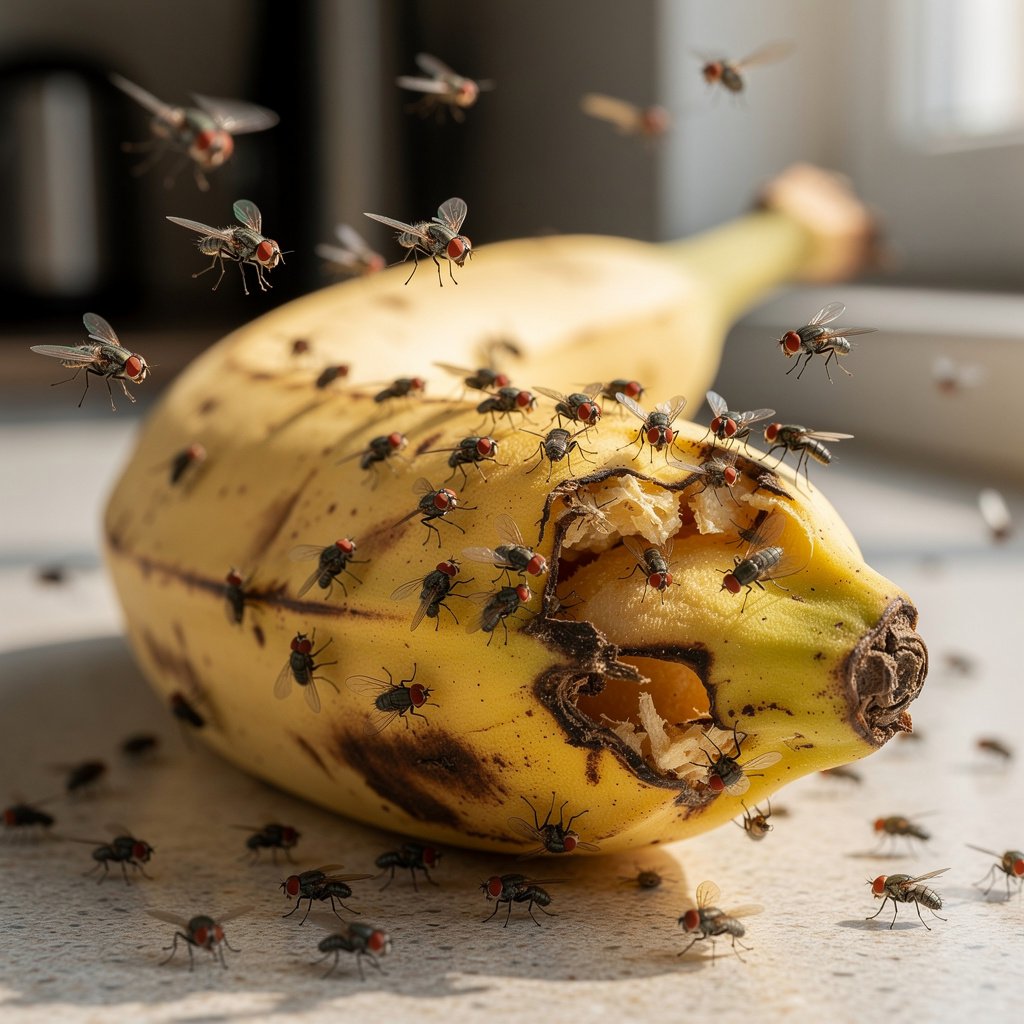
Drosophila melanogaster
Common fruit fly
Identification
What Is the Fruit Fly?
The common fruit fly (Drosophila melanogaster) is one of the smallest fly pests in Malaysia, measuring just 2–4mm in length. Easily identified by its distinctive bright red eyes and tan-to-yellowish-brown body, the fruit fly is found wherever fermentation occurs — from kitchens and wet markets to bar areas, food factories, and waste collection points.
Fruit flies are drawn to the chemical compounds released during fermentation and decomposition. This makes any environment with ripening fruit, standing liquids, or organic waste in drains a potential breeding ground. In Malaysia's warm, humid climate, their reproductive cycle accelerates — making year-round infestations the norm rather than the exception.
A female fruit fly can lay up to 500 eggs in her lifetime, depositing them directly on the surface of fermenting food or organic material. Larvae hatch within 24–30 hours and pupate rapidly, completing their development in as little as 8 days at Malaysian ambient temperatures.
Size
2–4 mm — very small, easily mistaken for gnats
Colour
Tan to yellowish-brown body, bright red eyes
Behaviour
Hovering near fermented food, drains, and organic waste
Breeding
Lays eggs on fermenting surfaces; egg-to-adult in 8 days
info Quick Facts
- Scientific name
- Drosophila melanogaster
- Family
- Drosophilidae
- Adult size
- 2–4 mm
- Lifespan
- 40–50 days (adult)
- Eggs per female
- Up to 500 in lifetime
- Life cycle
- 8–10 days (egg to adult)
- Habitat
- Fermenting food, drains, organic waste
warning HACCP & MOH Compliance Risk
For food businesses, a fruit fly infestation is not just a nuisance — it is a compliance violation. HACCP audits and MOH inspections treat active fly populations in food areas as a critical failure point that can lead to fines, suspension of operating licences, or forced closure.
Breeding Sources
Where Fruit Flies Breed
Fruit fly control without eliminating breeding sources will always fail. These are the most common sources in Malaysian homes and food businesses.
F&B & Commercial Sources
-
check_circle
Floor Drains
The most persistent commercial breeding source. Organic slime build-up inside drains provides ideal fermenting substrate for larvae.
-
check_circle
Bar & Beverage Stations
Spilled alcohol, juice, and syrups behind counters and in drip trays create irresistible fermentation breeding sites.
-
check_circle
Waste & Recycling Bins
Bins with food and liquid residue — especially those not cleaned regularly — are major breeding grounds in food preparation areas.
-
check_circle
Food Storage Areas
Overripe produce, fruit bowls, and poorly sealed dry goods storage provide both food and breeding material for fruit flies.
Residential Breeding Sources
-
check_circle
Overripe & Rotting Fruit
Bananas, mangoes, papayas, and other tropical fruits left on counters become prime breeding sites as they ripen in Malaysia's heat.
-
check_circle
Kitchen Sink Drains
Organic build-up inside sink and floor drains provides a hidden, continuously moist breeding environment that is easily overlooked.
-
check_circle
Damp Cleaning Cloths & Mops
Wet cloths, mops, and sponges with food residue left damp can harbour fruit fly larvae — especially overnight.
-
check_circle
Empty Bottles & Containers
Rinsed but uncleaned juice bottles, wine glasses, or fermented drink containers provide enough residue to sustain breeding.
Detection
Signs of Fruit Fly Infestation
A few fruit flies quickly become thousands. Recognise the signs of an active infestation before it escalates.
Small Flies Near Fruit or Bins
Tiny tan-coloured flies hovering around fruit bowls, bins, or kitchen surfaces — especially visible when approached or disturbed.
Flies Emerging from Drains
Fruit flies crawling out of sink or floor drains — particularly after periods of inactivity — indicate active breeding inside the drain system.
Larvae on Food Surfaces
Tiny white maggots (larvae) visible on the surface of overripe fruit or in liquid residues — a clear sign of active breeding on-site.
Rapid Population Growth
Numbers doubling or tripling within days — a hallmark of an active breeding source that has not yet been identified and eliminated.
Flies Around Beverages
Fruit flies hovering around open bottles, glasses, or bar areas — attracted by the fermentation compounds in alcohol and soft drinks.
Flies Persisting After Cleaning
If flies return immediately after removing visible food sources, a hidden breeding site (typically a drain or concealed spill) is still active.
Risks
Health & Business Risks
Fruit flies are more than an annoyance — they are food safety vectors with serious implications for food businesses and household hygiene.
Pathogen Transfer
Fruit flies carry bacteria, yeasts, and moulds on their bodies from breeding sites (drains, decaying matter) and deposit them on food contact surfaces and open food.
HACCP & MOH Violations
Active fly populations in food handling areas constitute a HACCP critical control point failure and MOH regulatory violation, with serious consequences for food operators.
Reputation Damage
A customer spotting fruit flies in a restaurant or cafe leads to negative reviews and social media exposure — potentially causing lasting reputational damage.
Food Spoilage Acceleration
Fruit flies accelerate the spoilage of fresh produce by introducing yeast and bacteria from decaying matter — increasing food waste and cost.
Explosive Reproduction Rate
A small infestation becomes a major problem within 2–3 weeks. Malaysia's heat shortens the breeding cycle further — populations double rapidly without intervention.
Food Safety at Home
In domestic settings, fruit flies contaminate food left on counters, threatening food safety for young children, elderly, and immunocompromised household members.
DIY Limitations
Why DIY Fruit Fly Control Fails
Fruit fly traps, sprays, and drain cleaners provide temporary relief but rarely eliminate infestations completely. Without identifying and treating all breeding sources, the population rebounds within days.
Traps Only Catch Adults
DIY traps and fly paper catch adult flies but leave breeding sources untouched — hundreds of larvae continue developing and emerging daily.
Hidden Breeding Sources Missed
Drain biofilm, concealed spills behind equipment, and wall voids with organic material are common breeding sites that routine cleaning misses.
Drain Cleaners Don't Kill Larvae
Commercial drain cleaners may reduce biofilm but do not reliably penetrate and kill fruit fly larvae in the drain gel layer without enzyme or professional treatment.
Rapid Rebound
With a life cycle as short as 8 days, even a brief gap in treatment allows populations to recover fully from a single undetected breeding source.
check_circle Professional Advantages
- done Systematic identification of all active breeding sources
- done Professional enzyme drain treatment that destroys biofilm breeding media
- done Residual insecticide gel bait targeted at resting and foraging sites
- done UV light traps for ongoing monitoring and population control
- done HACCP-compliant documentation for food business audits
- done Sanitation recommendations to prevent recurring infestations
Smart Pest Control
How We Eliminate Fruit Flies
Effective fruit fly control targets the source — not just the adults. Our approach eliminates breeding sites and prevents recurrence.
Breeding Source Identification
We conduct a systematic inspection of all potential breeding sites — drains, storage areas, waste points, and food handling zones — to locate and document every active source.
Source Elimination & Treatment
We treat drains with professional enzyme and insecticide formulations, apply targeted gel bait to resting sites, and install UV light traps for ongoing monitoring and adult control.
Monitoring & Prevention
We monitor trap counts to confirm population decline, provide sanitation guidelines specific to your kitchen or business, and schedule follow-up visits to prevent recurrence.
Treatment Methods We Use
Gel Bait Treatment
Targeted insecticide gel applied to resting surfaces and near breeding areas to knock down adult fly populations rapidly.
Residual Spray
Applied to walls, resting surfaces, and entry points to create a persistent treatment zone that kills flies on contact.
Enzyme Drain Treatment
Professional enzyme formulations that break down the organic biofilm inside drains — eliminating the primary breeding medium.
FAQ
Frequently Asked Questions
How can I identify fruit flies? expand_more
Why do I suddenly have so many fruit flies? expand_more
Are fruit flies a food safety risk for my F&B business? expand_more
Where do fruit flies breed? expand_more
How do I get rid of fruit flies permanently? expand_more
Fruit Fly Problem at Your Business or Home?
Don't let a fruit fly infestation threaten your HACCP compliance or food business reputation. Our specialists identify every breeding source and provide complete, documented elimination.