Norway Rat in Malaysia — The Ground-Dwelling Burrower
Also known as the brown rat or sewer rat, the Norway rat is the larger and more aggressive of the two common rat species in Malaysia. They are powerful burrowers that live primarily at ground level, creating extensive tunnel systems that can undermine building foundations and contaminate food supplies.
Their proximity to human settlements and ability to transmit serious diseases make them one of the most significant public health pests in urban Malaysia.
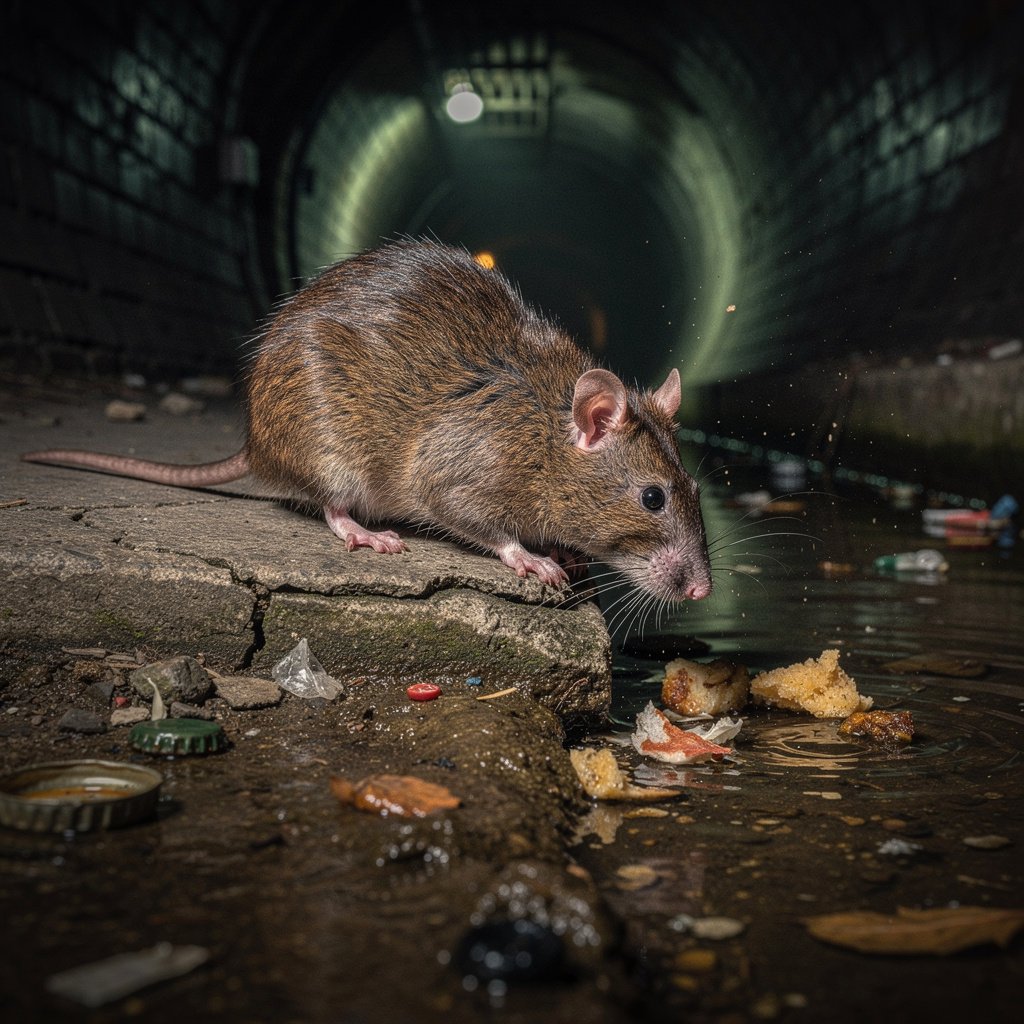
Rattus norvegicus
Scientific name
Identification
What Is the Norway Rat?
The Norway rat (Rattus norvegicus), despite its name, originated in northern China and spread worldwide through shipping. It is now the most widespread rat species in urban areas globally and throughout Malaysia.
Norway rats are stocky, heavy-bodied rodents with coarse brown or grey fur. They have a blunt muzzle, small ears relative to their body size, and a tail that is shorter than their body length — a key distinguishing feature from roof rats.
These rats are excellent burrowers, creating extensive underground tunnel systems for nesting, food storage, and protection. They are primarily nocturnal but may be active during the day when populations are high or food is scarce.
Size
Body 20–25cm, tail 15–20cm, total up to 40cm. Weighs 200–500g.
Colour
Coarse brown or grey fur, lighter underside. Tail is scaly and two-toned.
Distinguishing Features
Blunt nose, small ears, tail shorter than body. Stocky build.
Behaviour
Ground-dwelling burrower, excellent swimmer, cautious of new objects.
info Quick Facts
- Scientific name
- Rattus norvegicus
- Common names
- Brown rat, sewer rat, street rat
- Adult weight
- 200–500 grams
- Lifespan
- 1–2 years in wild
- Reproduction
- 6 litters/year, 6–12 pups each
- Gestation
- 21–24 days
- Activity
- Nocturnal, ground-dwelling
warning Rapid Reproduction Warning
A single pair of Norway rats can produce up to 200 offspring in a year under ideal conditions. Without control, a small problem becomes a major infestation within months. Early intervention is critical.
Habitat & Problems
Where Norway Rats Cause Problems
Norway rats thrive wherever food, water, and shelter are available — from city sewers to suburban gardens and commercial facilities.
Residential Areas
-
foundation
Basements & Crawl Spaces
Enter through gaps in foundations, drainage pipes, and utility lines. Nest in dark, damp areas with access to food.
-
yard
Gardens & Outbuildings
Burrow in garden beds, compost heaps, under sheds, and along fences. Can damage plants and garden structures.
-
garage
Garages & Storage Areas
Nest in stored items, pet food storage, and garbage areas. Can damage vehicles by gnawing wiring and hoses.
-
kitchen
Kitchens & Pantries
Enter ground-floor kitchens through gaps under doors, pipes, and walls. Contaminate food and surfaces.
Commercial & Public
-
storefront
Restaurants & Food Stores
Severe health code violations. Contaminate food storage, preparation areas, and inventory. Can close businesses.
-
warehouse
Warehouses & Factories
Damage stored goods, packaging materials, and equipment. Burrow under foundations causing structural issues.
-
water
Sewers & Drainage Systems
Commonly found in urban sewer systems. Enter buildings through broken pipes and drainage faults.
-
delete
Waste & Recycling Facilities
Thrive in refuse collection points, bin areas, and recycling centres. Require constant control measures.
Risks
Health & Property Risks
Norway rats pose serious threats to public health, food safety, and property integrity.
Disease Transmission
Carry leptospirosis (potentially fatal), salmonellosis, hantavirus, rat-bite fever, and plague. Urine and droppings contaminate surfaces humans touch and food preparation areas.
Parasite Vectors
Carry fleas, ticks, and mites that can transmit diseases to humans and pets. Historical vectors for bubonic plague transmission via flea bites.
Fire Hazard
Constant gnawing behaviour leads to chewing electrical wiring, creating short circuits and fire risks. Also damage gas pipes creating explosion hazards.
Structural Damage
Burrow systems undermine foundations, retaining walls, and garden structures. Gnaw through wood, plastic, plaster, and soft metals to gain entry.
Food Contamination
Contaminate food stores with droppings, urine, and hair. A single rat can spoil large quantities of stored food through contact and pathogens.
Business Compliance
Rat sightings or evidence result in health department citations, fines, and potential closure for food businesses. Reputation damage can be severe.
Detection
Signs of Norway Rat Infestation
Early detection prevents small problems from becoming major infestations. Know what to look for.
Burrow Entrances
Look for 7–10cm holes in ground near foundations, under sheds, in compost piles, and along walls. Fresh earth around the opening indicates active burrowing.
Droppings
Large, dark, capsule-shaped droppings (18–20mm long). Found along runways, near food sources, and in hidden areas. Fresh droppings are dark and moist; old ones are grey and crumbly.
Gnaw Marks
Distinctive parallel tooth marks on wood, plastic, wiring, and packaging. Fresh gnawing appears light in colour. Rats gnaw constantly to keep teeth worn down.
Tracks & Runways
Rats follow the same paths repeatedly, creating visible trails along walls and fences. In dusty areas, look for footprints and tail drag marks.
Pet Behaviour
Cats and dogs may become excited, stare at walls/floors, or paw at areas where rats are active. Pets often detect rat presence before humans.
Live or Dead Rats
Seeing rats during the day indicates a significant population. Dead rats may be found without obvious cause. Odour of decay may indicate rats dying in wall voids.
Neophobia (New Object Reaction)
Norway rats are cautious of new objects in their environment. This is why traps and bait stations may take several days to be effective — rats avoid them initially. Professional baiting programs account for this behaviour with strategic placement and pre-baiting.
DIY Limitations
Why DIY Rat Control Often Fails
Store-bought traps and poisons may catch or kill some rats, but rarely solve the underlying infestation. Norway rats are intelligent, cautious, and their rapid reproduction means partial control quickly becomes ineffective.
Neophobia Avoids Traps
Rats avoid new objects for days. DIY traps placed without understanding this behaviour catch only the most desperate or young rats, while the majority of the population continues breeding.
Improper Baiting
Using the wrong bait type, placing bait stations incorrectly, or using insufficient quantities allows rats to develop bait shyness. Partial poisoning can make control harder long-term.
Missed Entry Points
Without thorough inspection, entry points remain open. Rats can squeeze through 12mm gaps and will continue entering even if some are eliminated.
Reproduction Outpaces Control
A single missed pregnant female can restart the infestation. DIY efforts often don't eliminate enough rats quickly enough to overcome their reproductive rate.
check_circle Professional Advantages
- done Comprehensive inspection to locate all burrows, runways, and entry points
- done Strategic bait station placement accounting for neophobia
- done Professional-grade rodenticides with multiple active ingredients
- done Exclusion work to seal entry points and prevent reinvasion
- done Follow-up monitoring and population assessment
- done Safe carcass removal and sanitation recommendations
Smart Pest Control
How We Eliminate Norway Rats
Our integrated rodent management approach combines inspection, exclusion, population control, and monitoring for long-term results.
Inspection & Assessment
We conduct thorough property inspections to locate burrows, identify runways, find entry points, assess population size, and determine contributing factors like food and water sources.
Treatment & Exclusion
We implement a combination of baiting programs using professional-grade rodenticides, strategic trapping for immediate reduction, and exclusion work to seal entry points and prevent reinvasion.
Monitoring & Prevention
We provide ongoing monitoring through bait stations, regular inspections, and recommendations for environmental modifications to prevent future infestations.
Treatment Methods We Use
Rodent Baiting Systems
Strategically placed tamper-resistant bait stations containing professional-grade rodenticides. Multiple active ingredients prevent resistance.
Trapping Programs
Snap traps and multi-catch traps placed along runways for immediate population reduction and monitoring catch rates.
Exclusion & Proofing
Sealing entry points with rodent-proof materials, installing door sweeps, screening vents, and repairing structural gaps.
FAQ
Frequently Asked Questions
How can I tell a Norway rat from a roof rat? expand_more
What diseases do Norway rats carry? expand_more
Where do Norway rats nest? expand_more
Can Norway rats damage my property? expand_more
What is the best way to control Norway rats? expand_more
Have a Rat Problem?
Our rodent control specialists provide fast, effective solutions for Norway rat infestations. We identify the species, locate entry points, and implement comprehensive control programs.