 Termites
Subterranean Termite in Malaysia — The Silent Property Destroyer
The most destructive termite species in Malaysia. Subterranean termites live underground, build mud tunnels to reach your property, and consume wood from the inside out — often causing extensive damage before you even know they're there.
Malaysia's tropical climate provides ideal conditions for these pests year-round. Early detection and professional treatment are essential to protect your property investment.
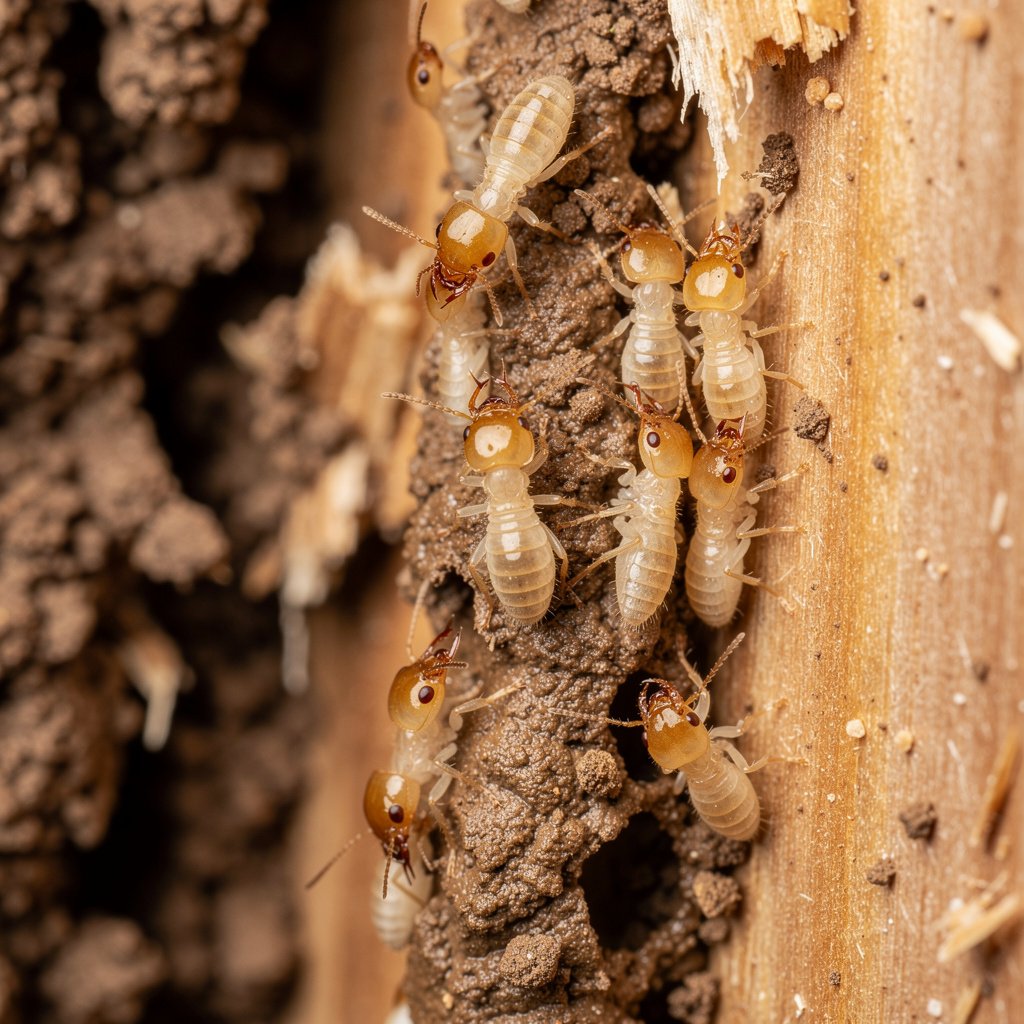
Coptotermes spp.
Most common genus
Identification
What Is the Subterranean Termite?
Subterranean termites are social insects that live in large underground colonies. Unlike drywood termites that live inside the wood they consume, subterranean termites nest in soil and travel to food sources through mud tubes they construct for protection.
In Malaysia, the most destructive species belong to the genus Coptotermes, particularly Coptotermes gestroi (formerly C. travians) and Coptotermes curvignathus. These species are responsible for the majority of termite damage to buildings in Southeast Asia.
A mature colony can contain millions of termites and extend across multiple properties. The colony consists of a queen, king, workers, soldiers, and reproductive alates (swarmers) that emerge to start new colonies.
Workers
Creamy-white, 3–6 mm. Do all the foraging, feeding, and tunnel building. Most numerous caste.
Soldiers
Larger heads, powerful mandibles. Defend the colony. First sign of infestation often seen.
Alates (Swarmers)
Dark-bodied with wings. Emerge during swarming season to mate and start new colonies.
Queen & King
Reproductive pair that founded the colony. Queen can live 15+ years and lay thousands of eggs daily.
info Quick Facts
- Scientific name
- Coptotermes gestroi (most common)
- Family
- Rhinotermitidae
- Colony size
- Up to 2 million termites
- Wood consumption
- Up to 5kg per month
- Nest location
- Underground, up to 3m deep
- Foraging range
- Up to 50m from nest
- Swarming season
- After rain, year-round in Malaysia
warning Hidden Damage Warning
Subterranean termites eat wood from the inside out, leaving only a thin outer layer intact. By the time you see visible damage, the internal structure may already be severely compromised. Regular inspections are crucial.
Habitat & Problems
Where Subterranean Termites Cause Damage
Subterranean termites attack any wood in contact with soil or accessible through mud tubes. In Malaysia's humid climate, no property is immune.
Residential Properties
-
foundation
Foundations & Structure
Wooden floor joists, support beams, and subflooring. Termites enter through cracks in foundations and expansion joints.
-
door_front
Door & Window Frames
Wooden frames in contact with walls or soil. Often first visible damage homeowners notice.
-
stairs
Staircases & Built-ins
Wooden staircases, built-in cabinets, and wardrobes. Can cause structural failure if supports are compromised.
-
deck
Outdoor Structures
Wooden decks, pergolas, fences, and garden sheds. Direct soil contact makes these easy targets.
Commercial & Industrial
-
warehouse
Warehouses & Factories
Wooden pallets, storage racks, and structural timber. Can damage inventory and compromise building safety.
-
storefront
Retail & Office Buildings
False ceilings, partition walls, and wooden fixtures. Hidden damage can affect multiple floors.
-
school
Schools & Institutions
Wooden furniture, library shelves, and structural elements. Safety concerns for occupants.
-
forest
Plantations & Agriculture
Rubber trees, oil palm, and timber plantations. Coptotermes curvignathus specifically attacks living trees.
Risks
Damage & Financial Risks
Subterranean termites pose one of the most significant financial risks to property owners in Malaysia.
Structural Damage
Termites hollow out load-bearing beams, floor joists, and wall studs. Severe infestations can cause floors to sag, walls to crack, and in extreme cases, partial building collapse.
High Repair Costs
Termite damage repair in Malaysia can range from RM10,000 to over RM100,000 for severe cases. Most homeowner insurance policies do not cover termite damage, leaving owners to bear the full cost.
Property Value Loss
Properties with active termite infestations or history of damage lose significant market value. Buyers negotiate lower prices or avoid affected properties entirely.
Business Disruption
Commercial properties may need to close for treatment and repairs. Lost revenue, relocation costs, and reputational damage add to the financial impact.
Inventory Damage
Businesses storing wooden products, paper goods, or packaging materials face inventory losses. Termites also damage books, documents, and archival materials.
Legal Liability
Property owners may face liability if termite damage causes injury to tenants or visitors. Landlords have a duty to maintain safe premises.
Detection
Signs of Subterranean Termite Infestation
Early detection can save thousands in repair costs. Know what to look for during regular inspections.
Mud Tubes
Pencil-width tunnels of soil and saliva on walls, foundations, or beams. Termites build these to travel between soil and food sources while protected from predators and dehydration.
Hollow-Sounding Wood
Tap wooden beams, door frames, or skirting boards. If they sound hollow or papery, termites may have eaten the interior. A screwdriver may push through easily.
Discarded Wings
Piles of translucent wings near windows, doors, or light fixtures. Swarmers shed wings after mating flights, usually after rain in Malaysia's tropical climate.
Frass (Droppings)
Small, wood-coloured pellets that resemble sawdust or sand. Unlike drywood termite frass, subterranean termite droppings are less commonly seen as they use it to build mud tubes.
Live Termites or Soldiers
Breaking open a mud tube may reveal creamy-white workers or soldiers with larger heads. Soldiers may click their heads against wood as a warning signal when disturbed.
Bubbling or Damaged Paint
Paint that appears bubbled, cracked, or has a honeycomb pattern underneath may indicate termite activity beneath the surface. Walls may feel warm in affected areas.
Annual Inspection Recommendation
In Malaysia's termite-prone climate, we recommend professional termite inspections at least once a year, especially for properties older than 5 years or those with previous termite history. Early detection can prevent catastrophic damage.
DIY Limitations
Why DIY Termite Treatment Fails
Over-the-counter termite sprays and hardware store solutions rarely eliminate subterranean termite colonies. The colony's underground location and massive size make DIY approaches ineffective and potentially costly mistakes.
Surface Sprays Don't Reach the Colony
Killing visible termites on the surface doesn't affect the millions underground. The colony continues producing workers to replace losses.
Inadequate Chemical Barriers
Creating an effective soil barrier requires specialised equipment to treat soil to the correct depth and concentration. DIY applications are rarely thorough enough.
Missed Entry Points
Termites enter through cracks as narrow as 1mm, expansion joints, utility penetrations, and beneath concrete slabs. Without professional knowledge, entry points are missed.
Wasted Time = More Damage
Every month of ineffective DIY treatment allows termites to continue eating. By the time professional help is sought, damage has often increased significantly.
check_circle Professional Advantages
- done Thorough inspection using moisture meters, thermal imaging, and acoustic detectors
- done Soil treatment with termiticide barriers around and beneath structures
- done Termite baiting systems that eliminate entire colonies, including the queen
- done Drilling and injection treatment for concrete slabs and foundations
- done Follow-up monitoring and warranty protection
- done Documentation for property transactions and insurance
Smart Pest Control
How We Eliminate Subterranean Termites
Our comprehensive termite control solutions target the colony, not just the symptoms, providing long-term protection for your property.
Comprehensive Inspection
Our certified technicians conduct thorough inspections using advanced detection equipment to locate termite activity, identify entry points, and assess the extent of infestation and damage.
Customised Treatment
Based on inspection findings, we recommend and implement the most effective treatment — soil treatment for immediate protection, baiting systems for colony elimination, or a combination approach.
Ongoing Protection
We provide monitoring, annual inspections, and warranty coverage to ensure long-term protection. Our team is available for any concerns between scheduled visits.
Treatment Methods We Use
Soil Treatment
Creates a chemical barrier in the soil around and beneath your property. Termites cannot detect the treatment and carry it back to the colony.
Termite Baiting Stations
Strategically placed stations contain bait that termites prefer over wood. The slow-acting toxin is carried back to eliminate the entire colony including the queen.
Corrective Treatment
For existing infestations, we drill and inject termiticide into concrete slabs, treat voids in masonry, and apply direct treatment to active mud tubes.
FAQ
Frequently Asked Questions
How do I know if I have subterranean termites? expand_more
How much damage can subterranean termites cause? expand_more
Are subterranean termites common in Malaysia? expand_more
Can I treat subterranean termites myself? expand_more
What is the best treatment for subterranean termites? expand_more
Protect Your Property from Termites
Don't wait until damage is visible. Our certified termite specialists provide thorough inspections and effective treatment solutions tailored to Malaysian conditions.