HACCP Pest Control Requirements in Malaysia
Hazard Analysis and Critical Control Points (HACCP) is the foundation of food safety management. Pest control is a critical prerequisite program that auditors scrutinise closely. Understanding how to integrate pest management with your HACCP system ensures compliance and protects your certification.
This guide explains pest control requirements within the HACCP framework, documentation expectations, and how to prepare for audits.
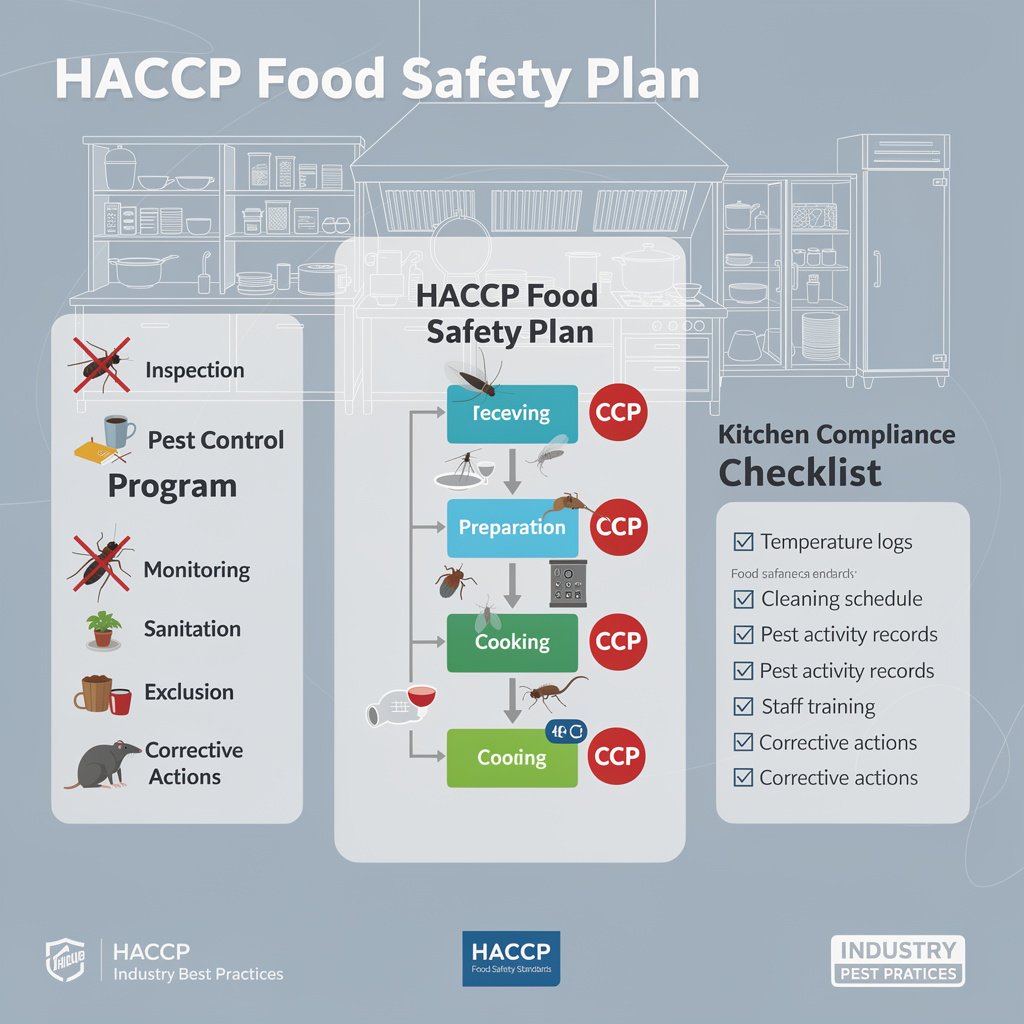
HACCP
Compliant
Understanding HACCP
What is HACCP?
HACCP (Hazard Analysis and Critical Control Points) is a systematic approach to food safety that identifies, evaluates, and controls hazards throughout the food production process. Originally developed for NASA, HACCP is now the global standard for food safety management and is mandatory for food businesses in Malaysia.
The 7 HACCP Principles
- 1 Conduct hazard analysis
- 2 Determine critical control points (CCPs)
- 3 Establish critical limits
- 4 Establish monitoring procedures
- 5 Establish corrective actions
- 6 Establish verification procedures
- 7 Establish record-keeping
Prerequisite Programs (PRPs)
Before implementing HACCP, businesses must establish Prerequisite Programs — foundational conditions and activities necessary for food safety. Pest control is explicitly required as a PRP.
Integration
Pest Control's Role in HACCP
Pests are biological hazards that can contaminate food at any stage of production. Your pest control program must address seven key areas to satisfy HACCP requirements.
1. Risk Assessment
Documented assessment of pest risks specific to your facility, including building vulnerabilities, surrounding environment, and historical pest activity.
2. Exclusion Measures
Physical barriers preventing pest entry: door seals, window screens, air curtains, and sealed openings. Documented inspection and maintenance schedules.
3. Sanitation Integration
Cleaning protocols that eliminate food sources and harborage. Pest control recommendations incorporated into sanitation schedules.
4. Treatment Protocols
Approved treatment methods using only chemicals permitted in food premises. Application restricted to non-production hours with documented re-entry procedures.
5. Monitoring Systems
Continuous monitoring through devices (glue boards, bait stations, pheromone traps) with documented placement maps and inspection frequencies.
6. Corrective Actions
Predefined procedures for responding to pest sightings, including immediate response, root cause analysis, and preventive measures to prevent recurrence.
7. Documentation
Complete records of all pest control activities, monitoring results, corrective actions, and trend analysis. Documents must be audit-ready at all times.
Records
Required Documentation
HACCP auditors will examine your pest control documentation in detail. Missing or incomplete records are common findings that can result in non-conformities. Ensure these documents are complete, current, and readily accessible.
contract Service Contract
Current contract with licensed pest control operator specifying scope, frequency, and responsibilities.
description Service Reports
Detailed report for every service visit including findings, treatments applied, and recommendations.
map Site Plan & Device Maps
Maps showing locations of all monitoring devices, bait stations, and entry points.
bug_report Pest Sighting Log
Record of all pest sightings including date, location, pest type, action taken, and resolution.
Complete Document Checklist
Tip: Organise documents chronologically in a dedicated pest control file. Auditors expect to find records quickly.
Procedures
Monitoring & Audit Preparation
Daily Monitoring
Staff should check monitoring devices daily during routine inspections. Any pest activity, damaged devices, or displaced stations must be recorded immediately and reported to the pest control provider.
Weekly Reviews
Review pest sighting logs and monitoring records weekly. Look for patterns or trends that may indicate emerging issues. Ensure corrective actions from the previous week were completed.
Monthly Service Visits
Your licensed pest control operator should conduct thorough inspections monthly (minimum). Service reports must detail findings, treatments applied, and recommendations for improvement.
Quarterly Reviews
Conduct management review of pest control program effectiveness. Analyse trends, review incidents, and update risk assessments. Document decisions and actions in management meeting minutes.
fact_check Audit Preparation Checklist
Pre-Audit Self-Inspection
Walk through with the mindset of an auditor. Look for pest evidence, gaps in exclusion, and documentation issues.
Organise Documentation
Ensure all records are complete, dated, and signed. Prepare summary reports of trending data.
Brief Your Team
Ensure staff understand pest control procedures and can answer basic questions about monitoring and reporting.
Schedule Pest Control Visit
Arrange service close to audit date to ensure all devices are fresh and any issues are addressed.
Avoid Non-Conformities
Common HACCP Pest Control Violations
Understanding common audit findings helps you proactively address issues before they become non-conformities.
Evidence of Pests
Live or dead pests, droppings, nesting materials, or gnaw marks found during audit. Critical non-conformity requiring immediate corrective action.
Missing Documentation
Incomplete service records, missing reports, or gaps in monitoring data. Auditors expect continuous, complete documentation.
Unlicensed Operator
Using pest control companies without valid PAL/APAL licences. Always verify and retain copies of current licences.
Poor Exclusion
Gaps under doors, broken screens, unsealed penetrations, or open windows without screens. Physical barriers must be maintained.
Inadequate Monitoring
Insufficient monitoring devices, poor placement, or lack of inspection records. Device maps must match actual installation.
No Corrective Actions
Pest sightings logged without documented corrective actions or follow-up. Each incident requires resolution evidence.
FAQ
HACCP Pest Control Questions
Is pest control mandatory for HACCP certification? expand_more
What documentation is required for HACCP pest control? expand_more
How often should pest control be done for HACCP compliance? expand_more
Can I use any pest control company for HACCP compliance? expand_more
What happens if pests are found during a HACCP audit? expand_more
HACCP-Compliant Pest Control
Uni Smart Pest Control provides HACCP-compliant pest management for food businesses across Malaysia. Our service includes complete documentation, audit support, and staff training.