Jabatan Pertanian Pest Control Regulation
The Department of Agriculture (Jabatan Pertanian Malaysia) serves as the primary regulatory authority for pest control operations in Malaysia. Under the Pesticides Act 1974, they oversee pesticide registration, operator licensing, and enforcement to protect public health and the environment.
This guide explains Jabatan Pertanian's role, how they regulate the industry, and what businesses and consumers should know about compliance.
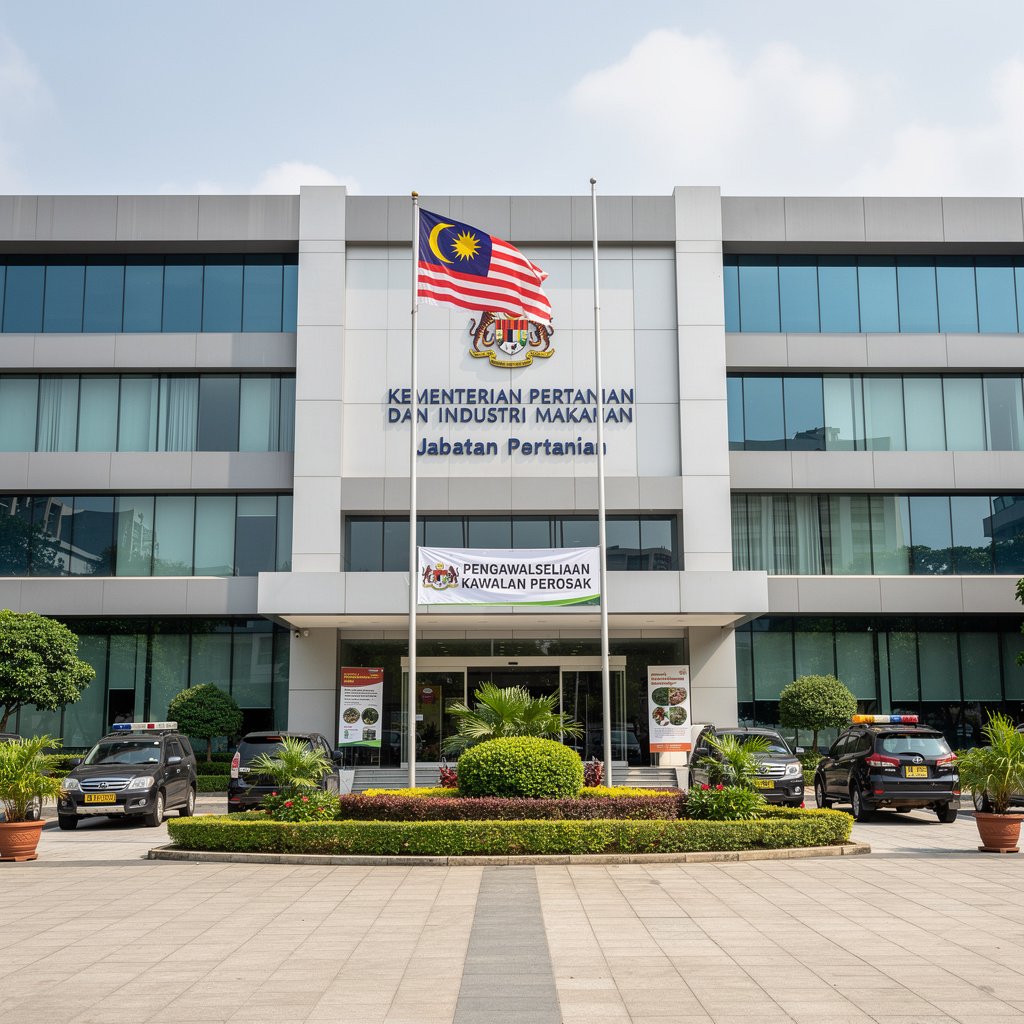
DOA
Malaysia
Overview
What is Jabatan Pertanian?
Jabatan Pertanian (Department of Agriculture) is a federal agency under Malaysia's Ministry of Agriculture and Food Security. Established in 1905, the department has evolved to address modern agricultural challenges including pest management and pesticide safety.
The Plant Biosecurity Division (Bahagian Bioselamatan Tumbuhan) specifically handles pesticide regulation and pest control operator licensing. They operate through headquarters in Putrajaya and state offices throughout Malaysia.
Contact Information
- location_on HQ: Wisma Tani, Presint 4, 62624 Putrajaya
- language Website: www.doa.gov.my
- call Main line: 03-8870 4000
Pesticides Act 1974 (Act 149)
The primary legislation governing pest control in Malaysia, providing Jabatan Pertanian with authority to:
Register Pesticides
Evaluate and approve pesticides for use in Malaysia based on efficacy and safety data.
License Operators
Issue PAL and APAL licences to qualified pest control companies and technicians.
Enforce Compliance
Inspect premises, investigate violations, and impose penalties for non-compliance.
Regulate Imports
Control the importation of pesticides and pest control equipment.
Regulatory Functions
Jabatan Pertanian's Key Responsibilities
Understanding how the Department of Agriculture regulates pest control helps businesses and consumers make informed decisions and ensure compliance.
Pesticide Registration
Evaluating and registering pesticides for use in Malaysia. Each product undergoes rigorous assessment of efficacy, toxicity, environmental impact, and residue levels before approval.
Operator Licensing
Issuing PAL (standard) and APAL (advanced) licences to pest control operators. Setting training requirements, examination standards, and continuing education requirements.
Inspections
Conducting routine and spot inspections of licensed operators. Checking compliance with licensing conditions, proper chemical storage, equipment maintenance, and record keeping.
Enforcement
Taking action against violations including unlicensed operations, use of banned pesticides, improper application, and false advertising. Powers include fines, licence suspension, and prosecution.
Pesticide Monitoring
Monitoring pesticide residues in food and the environment. Conducting surveillance programs and publishing data on pesticide usage and safety in Malaysia.
Public Education
Providing guidance on safe pesticide use, Integrated Pest Management (IPM), and proper pest control practices. Publishing lists of registered products and licensed operators.
Chemical Safety
Pesticide Regulations in Malaysia
Jabatan Pertanian maintains strict control over which pesticides can be used in Malaysia. The registration process evaluates products against safety, efficacy, and environmental criteria.
check_circle Registered Pesticides
Only pesticides with valid registration numbers can be legally used. Registration includes specific approved uses, application rates, and safety precautions.
warning Restricted Use
Some pesticides are restricted to licensed operators only (APAL required). These require specialised training and equipment for safe application.
block Banned Substances
Numerous pesticides are banned in Malaysia due to toxicity or environmental concerns. Use or possession of banned substances is a criminal offence.
Common Banned Pesticides
The following pesticides are prohibited in Malaysia. Licensed operators should never use these substances:
DDT
Dieldrin
Aldrin
Endrin
Chlordane
Heptachlor
Methyl Parathion
Paraquat*
*Paraquat is highly restricted with phase-out in progress. Check current status with Jabatan Pertanian.
Important: Using banned pesticides can result in fines up to RM 50,000 and/or imprisonment up to 5 years under the Pesticides Act 1974.
Getting Licensed
Pest Control Licensing Process
Understanding how Jabatan Pertanian issues licences helps businesses verify their pest control provider's credentials.
Application
Company submits application with business registration, staff qualifications, and equipment inventory.
Training
Technicians complete Jabatan Pertanian-approved training courses on pesticide safety and application.
Examination
Staff sit for certification exams testing knowledge of pest biology, pesticides, and safety procedures.
Inspection
Jabatan Pertanian inspects facilities, equipment, and storage before issuing licence.
Licence Renewal Requirements
Annual Renewal
Licences expire annually and must be renewed with updated documentation and fees.
Continuing Education
Technicians must complete refresher training to maintain certification.
Record Maintenance
Operators must maintain service records, chemical logs, and incident reports.
Compliance Verification
Random inspections verify ongoing compliance with licensing conditions.
Penalties
Enforcement & Penalties
Jabatan Pertanian takes violations of the Pesticides Act seriously. Enforcement actions range from warnings to criminal prosecution depending on the severity of the offence.
Operating Without Licence
Fine up to RM 10,000 and/or imprisonment up to 2 years for first offence. Higher penalties for repeat offenders.
Using Banned Pesticides
Fine up to RM 50,000 and/or imprisonment up to 5 years. Includes possession and distribution.
Improper Application
Fine up to RM 5,000 for violations including drift, contamination, or endangering public health.
How to Report Violations
If you suspect unlicensed pest control activity or improper pesticide use, report to Jabatan Pertanian:
Contact State Office
Find your nearest state office at www.doa.gov.my
Provide Details
Company name, operator name, vehicle details, location, date, and description of activity.
Submit Evidence
Photos, videos, documents, or samples that support your complaint (if safe to obtain).
Note: False reports are also punishable. Only report genuine concerns with supporting information.
FAQ
Common Questions
What is Jabatan Pertanian's role in pest control? expand_more
How do I verify a pest control licence with Jabatan Pertanian? expand_more
What pesticides are banned in Malaysia? expand_more
What should I do if I suspect unlicensed pest control activity? expand_more
How often must pest control licences be renewed? expand_more
Licensed & Regulated Pest Control
Uni Smart Pest Control operates under full Jabatan Pertanian licensing and complies with all Pesticides Act requirements. Request our licence details or arrange a consultation.