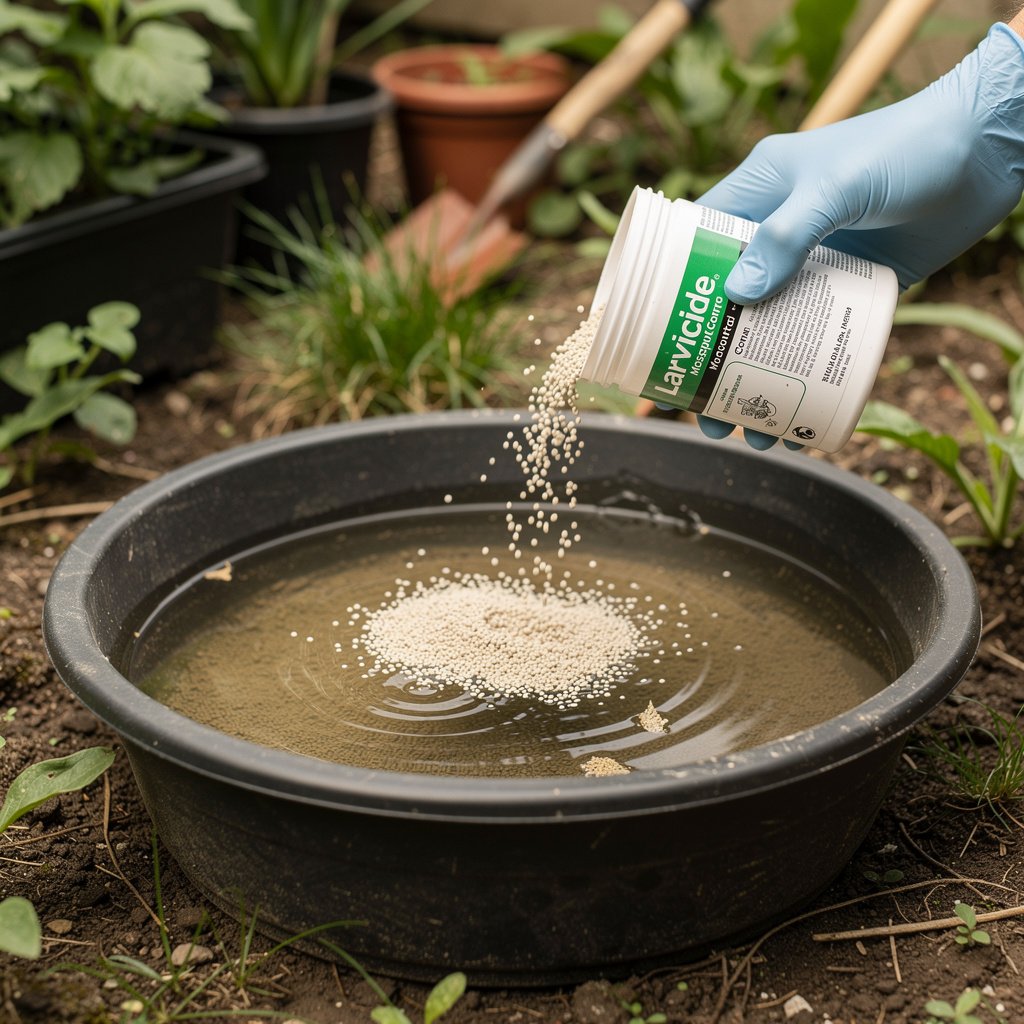
Target mosquito larvae at the source. Biological and chemical larvicides interrupt the breeding cycle before mosquitoes can fly, bite, and spread disease.
95%
Larval mortality
24-48hr
Larval kill time
7-30
Days protection
Bti
Biological agent
MOH
Recommended
Interrupt the mosquito life cycle at its most vulnerable stage—before they can fly and bite.
Thorough inspection identifies all standing water sources—obvious and hidden. Roof gutters, drains, containers, and construction puddles.
Biological (Bti) or chemical (IGR) larvicides applied directly to water. Larvae ingest the agent while feeding—harmless to non-target species.
Treated larvae die within 24-48 hours. IGRs prevent pupation. No adult mosquitoes emerge. Continuous protection through residual activity.
Larviciding is essential wherever standing water cannot be eliminated through source reduction.
Roof gutters, drains, water features, and ornamental ponds where Aedes mosquitoes breed around homes.
Puddles, water storage tanks, and equipment that collect rainwater—high-risk areas for dengue outbreaks.
Stormwater systems, cooling towers, and drainage infrastructure in factories, warehouses, and office parks.
Municipal drains, retention ponds, parks, and community areas requiring large-scale mosquito control.
The Malaysian Ministry of Health recommends larviciding as a core component of integrated vector management for dengue prevention.
During dengue outbreaks, larviciding is mandated for all identified breeding sites within 100 meters of confirmed cases.
Why larviciding is the cornerstone of effective mosquito management programs.
Eliminates mosquitoes before they can fly, bite, and reproduce. Prevents the next generation from emerging.
Bti affects only mosquito and black fly larvae. Harmless to humans, pets, fish, bees, and beneficial insects.
Critical for dengue, Zika, and chikungunya control. Reduces vector populations at the source before disease transmission.
IGR products provide 30-60 days of control. Less frequent application needed compared to adult mosquito fogging.
Lower cost per square meter than repeated fogging. Prevents costly dengue outbreaks and MOH enforcement actions.
Bti's mode of action makes resistance development virtually impossible. Effective even where chemical resistance is present.
Systematic approach ensuring complete breeding site coverage and effective control.
Comprehensive inspection maps all water-holding structures. Identifies breeding hotspots and mosquito species present.
Eliminate unnecessary standing water where possible. Drain containers, clear gutters, improve drainage—larvicide only what cannot be removed.
Apply appropriate larvicide formulation (granular, liquid, or briquette) based on site conditions and water quality.
Regular follow-up inspections track larval mortality. Reapply after rain or when new breeding is detected. Document for compliance.
Understanding how larviciding fits into comprehensive mosquito control.
| Factor | Larviciding | Adult Fogging | Source Reduction |
|---|---|---|---|
| Target Stage | Larvae (aquatic) | Adults (flying) | Breeding sites |
| Duration of Control | 7-30 days | 24-72 hours | Permanent |
| Environmental Impact | Low (Bti) | Moderate | None |
| Prevents Disease | Yes | Temporary | Yes |
| Best For | Standing water sites | Adult mosquito knockdown | Eliminable water sources |
Common questions about larviciding services.
Professional larviciding services for dengue prevention. Target breeding sites and interrupt the mosquito life cycle at its source.