Pest Control in Kuala Lumpur for Businesses & Homes
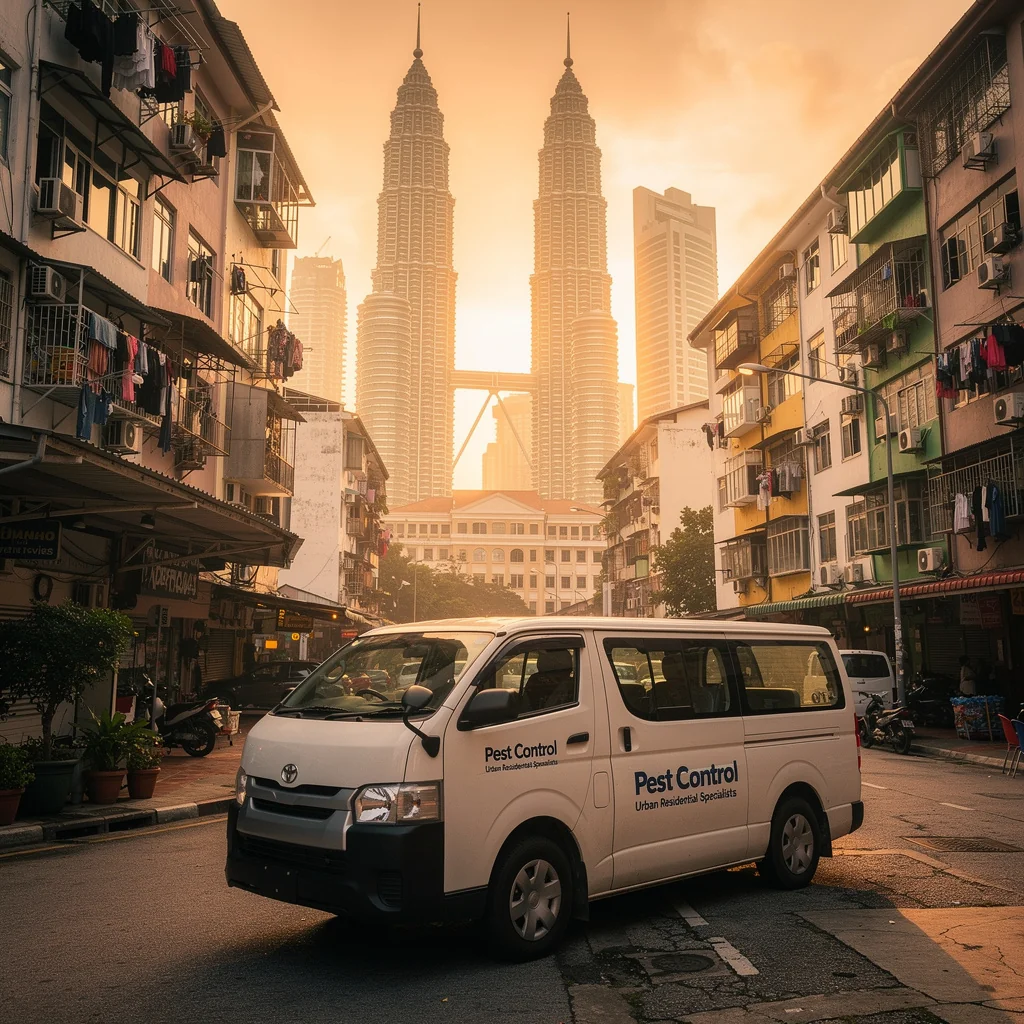
Kuala Lumpur's dense urban environment — high-rise condominiums, active food streets, ageing shophouses, and a constant mix of commercial and residential properties — creates persistent pest pressure across the city. Cockroaches thrive in shared drainage systems, rodents move freely between food premises and residential blocks, Aedes mosquitoes breed in the stagnant water that accumulates around construction sites and poorly maintained drains, and termites silently damage the timber structures of landed homes and older commercial buildings. Uni Smart Pest Control's PAL-licensed teams are based across KL for fast response times — serving homes, condominiums, restaurants, offices, hotels, and commercial properties across all areas of the city.
- location_on Full KL coverage — all areas from KLCC to Kepong, Cheras to Mont Kiara
- bolt Quick response for urgent pest issues across KL
- verified PAL/APAL licensed — MOH & HACCP compliant documentation
- home_work Residential & commercial — landed homes, condos, F&B, offices
Serving all areas in
Kuala Lumpur
Business & Commercial Pest Issues in Kuala Lumpur
KL is a federal territory under DBKL jurisdiction. Pest control documentation requirements are enforced by DBKL's Health Department (Jabatan Kesihatan) for food premises and by JKN (Negeri) for dengue-relevant sites — programs must satisfy both sets of expectations to keep your licence clean.
Heritage Food Streets — DBKL Licensing
KL's iconic food streets — Jalan Alor, Petaling Street (Chinatown), Chow Kit, Brickfields, and the Jalan Tun Sambanthan area — operate under tightly packed shop-lot layouts where shared drainage, refuse rooms, and back-lane grease traps create intense cockroach, rodent, and fly pressure across multiple premises. DBKL health inspections (typically unannounced) require current pest control contracts and written service reports from the last 6 months. Licence suspension is enforced within 14 days of a failed inspection.

Golden Triangle Hotels & Short-Stay Rentals
KL's hotel corridor — KLCC, Bukit Bintang, Berjaya Times Square, Pudu, Bangsar, and Mont Kiara serviced apartments — faces year-round bed bug pressure from international guest traffic. Short-stay platforms (Airbnb, Agoda, Booking.com) accelerate bed bug spread: a single infested room can seed an entire building within 4–6 weeks. Discreet after-hours treatment, documented room-by-room inspection protocols, and rapid-response standby contracts are essential for any KL hospitality operator competing on OTA ratings.
KLCC Office Towers & Grade-A Buildings
KL's Grade-A office stock (Menara KLCC, Exchange 106, Menara Maxis, Q Sentral, and the Bangsar South corporate cluster) operates under strict building management pest control standards. Tenant complaints about cockroaches in pantries, rodents in bin rooms, or ants in workstations trigger facility management escalation within 24 hours. Most KLCC buildings require contractors to hold PAL/APAL certification, public liability insurance, and approved-product lists before service begins.
MRT Corridor & High-Rise Construction
KL's ongoing MRT3 construction and dozens of high-rise residential projects (Taman Desa, Taman Melati, Sungai Besi) generate extensive Aedes breeding sites in retained earth, dewatering sumps, and temporary drainage. JKN conducts weekly site inspections and compounds operators RM500–RM5,000 per Aedes breeding finding under the Destruction of Disease-Bearing Insects Act 1975. Uni Smart provides weekly larviciding documentation accepted by all major KL main contractors.
Retail Malls & Pavilion-Class Properties
KL's premium retail — Pavilion KL, Suria KLCC, The Gardens Mall, MyTOWN, Sunway Velocity — operates 12–14 hours daily with constant food court and loading-dock activity. A single cockroach sighting on social media travels faster than any internal response. Programs typically include: monthly full-site service, weekly food-court hotspot checks, rodent bait station grid across back-of-house, and after-hours scheduling to avoid customer disruption.
High-Rise Strata Residences — COBFAA & MC Compliance
KL's high-rise residential density (>4,000 units per development common in KLCC, Mont Kiara, and Bangsar South) creates continuous pest pressure through shared service risers, refuse chambers, and basement car park drainage. Under the Strata Management Act 2013, the Management Corporation (MC) is legally responsible for common-area pest management. Documentation gaps expose MCs to commissioner (COBFAA) audit findings and resident tribunal claims. Uni Smart maintains per-building service records accepted by major KL MCs.
Home Pest Issues in Kuala Lumpur
KL is densely built and largely high-rise — pest pressures concentrate around shared infrastructure (drainage, refuse risers, service shafts) and around the green corridors that punctuate the city. Homeowners and MCs need pest programs that account for these shared pathways.

Termites in KL Landed Estates
Subterranean termites are the most costly pest problem for KL's landed homeowners — particularly in mature residential areas like Bangsar, Damansara Heights, Taman Desa, Ampang, and Kenny Hills where 50+ year-old timber structures, mature gardens, and proximity to the Ampang forest reserve create ideal termite habitat. KL landed homes also face drywood termite risk in roof trusses (especially post-monsoon). Annual termite inspections plus perimeter baiting station programs are the most cost-effective long-term protection — Uni Smart offers combined programs from RM2,200.

Dengue Risk Around KL Green Corridors
KL's parks — Taman Tasik Titiwangsa, Bukit Nanas, KLCC Park, Perdana Botanical Gardens, and the Ampang forest fringe — create persistent Aedes habitat. JKN Wilayah Persekutuan tracks dengue hotspot localities weekly and posts them publicly; areas like Taman Melati, Setapak, and Keramat have appeared on hotspot lists for 5+ consecutive years. Homeowners near these corridors benefit from monthly larviciding of roof gutters, garden containers, and perimeter drains, combined with ULV fogging during peak dengue weeks.

Cockroaches in KL High-Rise Residences
KL's condominium and apartment density (Mont Kiara, KLCC, Bangsar South, Sri Hartamas, Sentul, and the Jalan Kuchai Lama corridor) creates constant cockroach recruitment through shared drainage, refuse room risers, and service corridors. German cockroaches in kitchen cabinets and American cockroaches in bathroom floor drains are the two most common complaints. The most effective control combines individual unit treatment with the MC's building-wide common-area program — Uni Smart coordinates with major KL MCs on combined approaches.
Bed Bugs in KL Serviced Apartments & Airbnb Units
KL has one of Malaysia's highest concentrations of short-stay rental units — Mont Kiara, KLCC, Bukit Bintang, and the Chow Kit area host thousands of Airbnb, Agoda, and Booking.com listings. Bed bugs travel between units via shared walls, electrical conduits, and secondhand furniture (KL's active used-furniture trade in areas like Jalan Pasar accelerates this). Heat treatment is the gold-standard approach for KL's smaller units; whole-building coordinated programs are available for MCs managing multiple infested units.

Roof Rats in Older KL Shop-Houses
KL's older shop-house neighbourhoods — Petaling Street, Jalan Tun H.S. Lee, Jalan Sultan, parts of Chow Kit and Sentul — feature 3-storey walk-up buildings with shared roof spaces, aging drainage, and dense food premises below. Roof rats travel up service risers and through roof voids; Norway rats use ground-level drainage. Proofing of individual shop-house units is challenging because entry points are often shared with neighbours — coordinated building-wide programs are far more effective than single-unit treatment.

Garden & High-Rise Pest Variety
KL landed homes deal with fire ants and garden pests near green corridors; KL high-rise units deal with centipedes, silverfish, and occasional scorpions that enter through service penetrations and air-conditioning condensate drains. Both environments benefit from perimeter treatment around the property's exterior, plus targeted indoor residual application in kitchens, bathrooms, and service yards.
Smart Pest Control Services Available in Kuala Lumpur
All services available across KL — one-time treatments and annual programs for residential and commercial properties.
Termite Control KL
Baiting systems, soil treatment, annual inspections
Cockroach Control KL
Gel bait, residual spray, drain treatment
Rodent Control KL
Rat & mouse baiting, trapping, proofing
Mosquito Control KL
Larviciding, fogging, misting systems
Bed Bug Treatment KL
Heat treatment, residual spray, monitoring
Fogging Services KL
Thermal fogging, ULV cold fogging
Areas We Cover in Kuala Lumpur
Our technicians are based across KL for fast response times to all areas of the city.
Our Coverage Area in Kuala Lumpur
We service all areas within and surrounding Kuala Lumpur.
Local Insight
Common Pest Issues in Kuala Lumpur
Kuala Lumpur combines dense high-rises, heritage shoplots, green pockets and major commercial districts. Each setting produces different pest pressures.
High-rise mosquitoes and dengue
KLCC, Mont Kiara, Bangsar and Cheras have hundreds of condominiums where Aedes mosquitoes breed in rooftop tanks, planter boxes, drains and air-conditioner trays. Fogging alone is not enough; source mapping is essential.
Termites in heritage and old buildings
Pudu, Chow Kit, parts of Bangsar and old shoplots in Cheras still have timber structures that are vulnerable to subterranean termites. Early detection saves significant repair costs.
Restaurant and café pests
Bangsar, Bukit Bintang, TTDI and Sri Hartamas have dense F&B scenes. Cockroaches, flies and rodents threaten both hygiene ratings and brand reputation. Discrete night treatments protect operating hours.
Office building rodents
Office towers in KL Sentral, KL Eco City and Damansara Heights often have shared bin chutes, basement car parks and false ceilings. Rats move between floors using utility ducts, requiring coordinated treatment.
Seasonal Planning
Kuala Lumpur Pest Calendar
KL’s urban heat island and monsoon rainfall shape pest behaviour throughout the year.
March–May (Inter-monsoon)
Dengue cases typically rise across KL. Condominiums should increase source-check frequency and larviciding around common areas.
June–August (Dry months)
Termite swarmers are active in older neighbourhoods. Soil treatment and baiting-system installations are best scheduled now.
October–December (Monsoon)
Rodents and cockroaches move into offices and restaurants as outdoor drains flood. Proofing and drain maintenance reduce call-backs.
Case Study
Dengue Prevention Programme in a KL Condominium
A 400-unit condominium in Bangsar had received multiple dengue notifications from the local council. Despite regular fogging, breeding sites kept appearing in planter boxes, basement drains and rooftop water tanks.
We performed a full premise audit, tagged every breeding point, fitted drain covers, treated water-holding structures with larvicide, and educated residents about balcony water trays. Within eight weeks, active breeding sites fell by 94% and the building cleared its notice.
- checkFull-premise breeding audit
- checkDrain covers and larviciding
- checkResident education campaign
94%
Breeding-site reduction
8
Weeks to clearance
400
Units covered
0
Dengue notices after
Neighbourhoods
Kuala Lumpur Areas We Service
Our KL teams operate across the city centre and surrounding districts, from high-rise condos to heritage shophouses.
KLCC & City Centre
Hotels, offices and high-rise residences need discrete, after-hours pest management for cockroaches and rodents.
Bangsar & Mont Kiara
Upscale condos and restaurants require mosquito, termite and F&B pest control with minimal disruption.
Cheras & Kajang fringe
Dense housing and shoplots see high dengue pressure, termites and common household pests.
Kepong, Segambut & Sri Hartamas
Mixed residential and industrial areas need general pest, rodent and termite programmes.
Setapak & Wangsa Maju
Student housing and apartments report bed bug, cockroach and rodent issues.
Pudu, Chow Kit & Sentul
Heritage buildings and wet markets need termite, rodent and fly management aligned with local council requirements.
Service Experience
What to Expect When We Visit Your KL Property
KL properties often have tight access, shared facilities and strata-management rules. We coordinate with guards, management offices and tenants to keep visits smooth.
Access coordination
We arrange entry with building management, security and tenants so treatments happen on schedule.
Discrete service
For hotels, offices and restaurants, we use unmarked vehicles and after-hours slots to protect your brand.
Strata-ready reporting
Condo committees receive service reports suitable for AGM and maintenance-fund discussions.
Fast response
Emergency call-outs for cockroach, bed bug or rodent issues are usually attended within 24 hours in KL.
Nearby Locations
Pest Control Near Kuala Lumpur
We also cover these areas around KL.
Transparent Pricing
Pest Control Pricing in Kuala Lumpur
KL pricing depends on building type, access constraints and whether treatment must happen outside operating hours.
Residential
- Condo / apartmentRM 130 – 240/visit
- Landed homeRM 180 – 320/visit
- Bed bug treatmentRM 800 – 1,600
- Termite soil treatmentRM 2,800 – 6,500
Commercial
- Restaurant / café monthlyRM 220 – 550/month
- Office / co-workingRM 200 – 450/month
- Hotel / hospitalityCustom quote
- Retail mall outletFrom RM 250/month
Prices are indicative. After-hours and discrete-service bookings may carry a small surcharge in central KL.
Prevention
Pest Prevention Tips for Kuala Lumpur Properties
Dense buildings and shared services in KL mean pests can move quickly. These prevention steps help property managers and residents stay ahead.
Service rooftop tanks and drains
Condos in Bangsar, Mont Kiara and KLCC should clean water tanks and clear rooftop drains quarterly to prevent mosquito breeding.
Manage bin chutes
High-rise bin chutes attract cockroaches and rodents if not cleaned regularly. Schedule chute flushing and refuse-room treatment monthly.
Proof restaurant back doors
F&B outlets in Bukit Bintang and Sri Hartamas should install door sweeps and air curtains to block flies and rodents during service hours.
Act fast on termite swarmers
Flying termites near windows in older KL buildings are a warning sign. Book an inspection before damage spreads behind walls.
Pest Control in KL — FAQs
Common questions from KL homeowners and business operators.
Which areas of Kuala Lumpur do you cover? expand_more
What are the most common pest problems in Kuala Lumpur homes and businesses? expand_more
Do you provide pest control for condominiums in Kuala Lumpur? expand_more
Can you provide pest control documentation for restaurant MOH inspections in KL? expand_more
How quickly can you respond to an urgent pest problem in Kuala Lumpur? expand_more
How much does pest control cost in KL? expand_more
Can you treat pests discreetly for hotels and offices? expand_more
Do high-rise condos in KL really get dengue mosquitoes? expand_more
Get a Free Pest Control Quote for Your KL Property
Our PAL-licensed teams are based across Kuala Lumpur for fast response times. Tell us your area and pest problem — we'll confirm coverage and provide a quote, usually within the hour.
Related pest control pages
Explore more from Uni Smart Pest Control: Termite control, Rodent control, Cockroach control, All services, Commercial pest control, Areas we serve, Free site visit.