Fly Control in Malaysia for Food Businesses & Homes
Lalat (flies) in a restaurant or food facility are not just a nuisance — they're a critical food safety hazard that can trigger HACCP non-conformances and customer complaints in seconds. Uni Smart delivers comprehensive fly management programs using UV insect light units, targeted residual treatment, and drain management to eliminate fly populations at the source.
- verifiedPAL/APAL licensed — HACCP-ready ILU catch records and service reports
- light_modeUV insect light units — continuous chemical-free fly capture
- plumbingDrain treatment to eliminate fly breeding sites at the source
- scheduleMonthly service contracts with written documentation
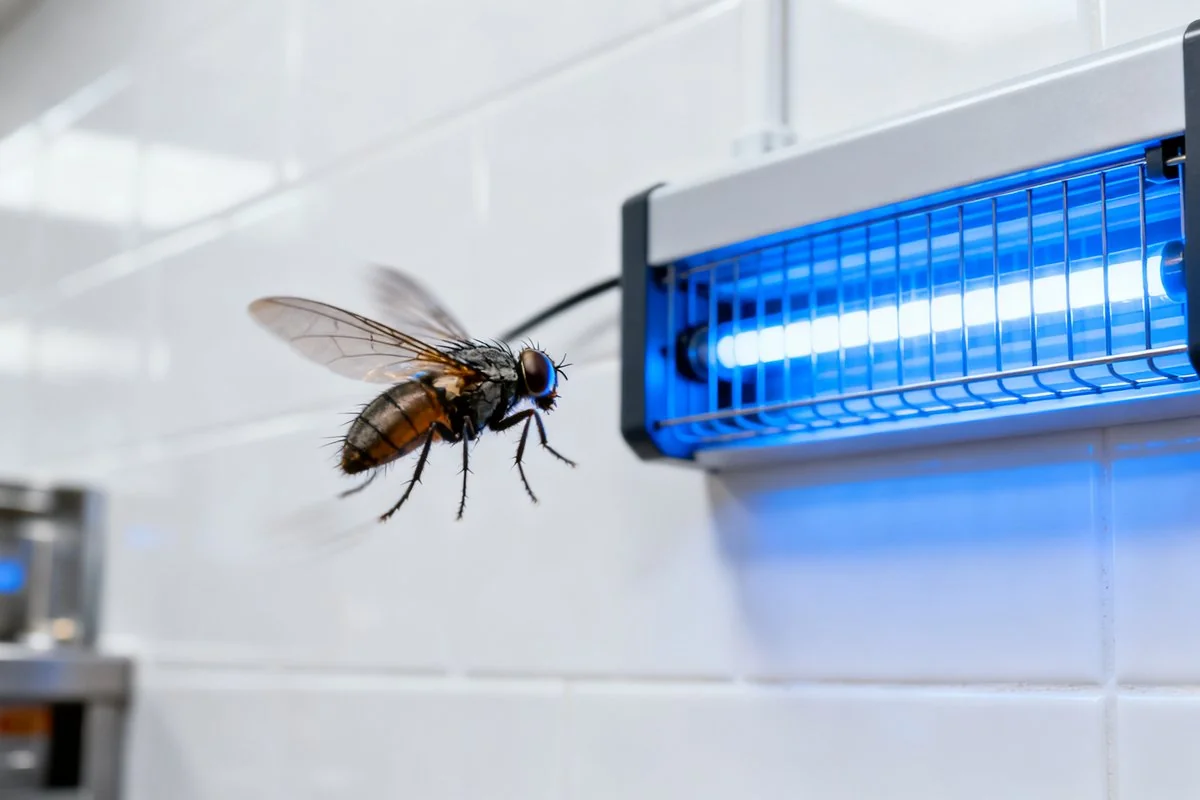
Chemical-Free Option
UV Insect Light Units
Fly Problems in Malaysian Businesses & Homes
Malaysia's tropical climate, combined with abundant organic waste and drains, creates ideal conditions for fly populations to thrive year-round — particularly in food-handling environments.
For Food Businesses & Facilities
HACCP & Food Safety Non-Conformances
Fly activity in food preparation, storage, or serving areas is a direct HACCP critical control point failure. A live fly on food contact surfaces or products during an audit results in immediate non-conformance.
Pathogen Transmission
House flies carry and transmit over 100 pathogens including salmonella, E. coli, and cholera — depositing them on food surfaces through their feet, saliva, and regurgitation during feeding.
Customer Complaints & Loss of Trade
A fly landing on food served to a customer — or visible in a kitchen through a pass — triggers complaints, negative reviews, and lost repeat business that directly impacts revenue.
Fruit Fly Fermentation Risk
Fruit flies (Drosophila) breed in fermenting liquids, overripe fruit, and drain slime — compromising beverage, condiment, and fresh produce quality in restaurants and food production facilities.
For Homes & Residential
Kitchen & Dining Hygiene
House flies in home kitchens contaminate uncovered food, drinks, and kitchen surfaces — posing a food poisoning risk for the entire household, particularly for children and the elderly.
Fruit Fly Infestations
Fruit fly swarms around kitchen waste bins, overripe fruit, and damp areas under sinks are a common complaint in Malaysian homes — particularly during the hot season when fruit is abundant.
Blow Fly Activity from Waste
Blow flies (large metallic flies) breed in organic waste, drain sediment, and animal faeces — with large populations indicating a nearby decomposing material or drainage problem requiring urgent attention.
Recurring Infestations
Fly populations recover rapidly from adult knockdown if breeding sites are not eliminated. Professional treatment addresses both adult populations and the drain, waste, or decaying organic material attracting and sustaining the infestation.
Our Smart Fly Control Process
Eliminating breeding sites, capturing adults, and documenting everything — a complete fly management approach for HACCP-compliant food businesses.
Species ID & Source Inspection
We identify the fly species, locate breeding sources (drains, waste areas, organic material), assess ILU positioning, and evaluate sanitation factors — all before recommending the right treatment program for your premises.
ILU Installation & Treatment
We install or service UV insect light units in strategic locations, apply residual insecticide to resting surfaces, treat drains with biocidal gel or foam to eliminate breeding sites, and advise on sanitation measures that reduce fly attraction.
Monitoring, Catch Records & Reports
ILU catch boards are checked and recorded at each service visit — tracking species, numbers, and activity trends. Written service reports document all treatments and findings. These records are your primary fly evidence for HACCP and BRC audits.
Fly Control Service Options
Monthly food facility programs or residential fly treatment — we provide the right solution for your environment.
Commercial Fly Programs
For restaurants, food factories, markets, hotels, and warehouses needing ongoing fly management with full HACCP documentation.
- check_circle ILU installation, servicing, and catch recording
- check_circle Monthly residual treatment and drain management
- check_circle HACCP-ready service reports and catch data
- check_circle Species trend analysis for audit submissions
- check_circle Fogging available for large-scale knockdown
Home Fly Treatment
For homes, condominiums, and small businesses with house fly or fruit fly problems — targeted and effective.
- check_circle One-off or recurring treatment plans
- check_circle Drain and waste area treatment
- check_circle Kitchen and outdoor area treatment
- check_circle Sanitation advice to prevent recurrence
- check_circle Safe around household members
Integrated Approach
How Professional Fly Control Works in Malaysia
Flies are a symptom of a larger problem. Sustainable control targets adults, breeding sites, and the conditions that attract them.
Inspection and identification. The first step is to identify the fly species and locate breeding sites. House flies breed in decaying organic matter and waste, while fruit flies prefer overripe fruit, fermenting liquids, and drain build-up. Different species require different treatments and monitoring points.
Source reduction. We eliminate or manage breeding sites before applying treatments. This includes cleaning drains, removing decaying matter, improving waste storage, and fixing leaks. Source reduction is the most important long-term control measure for any fly problem.
Adult control. Insect light units (UV traps) capture adult flies continuously without chemicals. Residual insecticide applied to resting surfaces kills flies that land in treated areas. Fogging or ULV treatment may be used for heavy infestations or outdoor events.
Exclusion and proofing. We recommend air curtains, fly screens, door sweeps, and proper waste-bin lids to stop flies from entering food preparation and production areas. Exclusion is especially important for restaurants, food factories, and hotels.
Monitoring and documentation. Commercial fly control programmes include regular service visits, catch-count records, corrective action logs, and HACCP-compliant reports. These records demonstrate due diligence to auditors and help track whether the programme is working.
Whether you manage a restaurant, a food factory, or a home kitchen, the key to fly control is consistency. A single fogging session will not solve a breeding-source problem. Our programmes combine immediate adult control with ongoing monitoring and prevention to keep fly counts low year-round.
Common Fly Species in Malaysian Food and Residential Environments
House fly (Musca domestica)
The most common pest fly. Breeds in waste, drains, and animal droppings. Transfers bacteria to food surfaces. Controlled with sanitation, UV traps, and residual spray.
Fruit fly (Drosophila)
Small flies that breed in overripe fruit, juices, and organic drain build-up. Common in bars, juice counters, and residential kitchens. Best controlled through drain cleaning and hygiene.
Blow fly
Larger flies attracted to meat, decomposing protein, and waste. Often indicate a dead animal or unclean waste area. Rapid source removal is essential.
Drain fly / moth fly
Tiny flies that breed in slimy drain biofilm. Common in floor drains, grease traps, and rarely used sinks. Treated with drain foaming and mechanical cleaning.
Fly Control FAQs
Common questions about lalat (fly) control in Malaysia.
How do you control flies in a restaurant or food factory?expand_more
Are UV fly traps safe near food?expand_more
What fly species are common in Malaysian food businesses?expand_more
What causes a sudden increase in flies?expand_more
Is fly control required for HACCP compliance?expand_more
A Fly on Food Is a Failed Audit Waiting to Happen.
Protect your HACCP certification, your reputation, and your customers. Our PAL-licensed team installs and services UV fly control systems and delivers full documentation for every visit across KL and Selangor.
Who Performs This Service
Uni Smart Service Team
Every service is delivered by Jabatan Pertanian-licensed technicians with documented experience in commercial and residential pest control across KL and Selangor.
Lead Field Technician
PAL & APAL Licensed · Jabatan Pertanian Malaysia
Holds current Pest Applicator License (PAL) and Assistant Pest Applicator License (APAL) issued by the Department of Agriculture Malaysia. Over 12 years of field experience across commercial food premises, hospitality, healthcare, and residential termite and rodent control. Specialises in colony-elimination baiting system design and HACCP-compliant monitoring programs.
Quality & Compliance Lead
HACCP & ISO 22000 Documentation Specialist
Responsible for service report quality and audit-readiness across all commercial accounts. Reviews every written report before delivery to ensure HACCP, MOH, ISO 22000, and Strata Management Act 2013 documentation standards are met. 8+ years preparing audit documentation for F&B manufacturers, hotels, and food premises in KL and Selangor.
PAL/APAL
All Technicians Licensed
Since 2010
15+ Years in Operation
5,000+
Properties Serviced
Licence documentation (current PAL/APAL certificates and product safety data sheets) is provided with every written service report on request.
Related pest control pages
Explore more from Uni Smart Pest Control: Residual spray method, Housefly guide, Fruit fly guide, Food factory pest control.